
10 Questions With The New Dean Of Bellisario College Of Communications
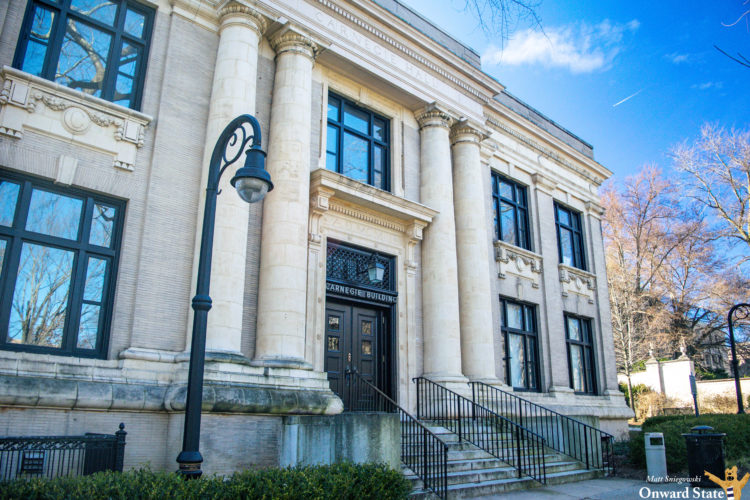
During the spring semester, Penn State announced that Emily Metzgar would take over as the new dean of its College of Communications, with her appointment beginning on July 1.
Metzgar was brought in from Kent State University, where she served as a professor and director of the School of Journalism and Media. She succeeded Denise Bortree, associate dean, professor in the Department of Advertising/Public Relations, and director of the Arthur W. Page Center, who had served as interim dean since June 2025.
Although Metzgar is a few months into her term, most students have been on summer break and haven’t had a chance to meet her yet.
We decided to talk to her for you.
Onward State: What was it about Penn State and the Bellisario College that made you want to take the job?
Dean Emily Metzgar: The college has a fantastic reputation among professionals in the industries for which we prepare our students, among faculty and academics, in the journalism, mass communication, and media education spaces. I have been aware of the Bellisario College since I first entered higher ed, and the opportunity to apply for and then to earn this role is just so exciting! I couldn’t be happier to be here.
OS: You’re coming into a college with a strong reputation in journalism, broadcasting, advertising, and film. What do you think Bellisario does particularly well, and where do you see room for growth?
Dean Metzgar: It is abundantly clear that the college is dedicated to helping students get the best education they can and the best path from college into the working world that they can, so everything we do is geared toward making that happen.
Whether it’s the fundraising we do to create scholarships to support our students, or it’s the academic advising that we do. Our advising team saw almost 500 drop-in students last week — that is just absolute dedication. The dozens of student organizations that we sponsor and that are affiliated with the college. The dedication of our faculty: these are really hardworking faculty who care deeply about the students.
I think what I love is that when I was first researching the position, I looked at the website and it said “big school resources, small school feel,” and any place can say that, but that’s really true.
There is just a sense of community in the college that is so hard to build, but it’s here, and it’s solid. And my goal is to make sure that we keep it and that we grow it so everyone who comes, every student who comes in our door, feels welcomed, and that we do everything we can to help them succeed while they’re here and after they graduate.
OS: Bellisario is one of Penn State’s smallest academic colleges, and it’s known for the close relationships between students and faculty. Have you already felt that sense of community since arriving, and how do you hope to build those relationships as dean?
Dean Metzgar: Well, when I interviewed for the job, I said, “Look, this school does so much right. My goal is to not break anything and then to build on this incredible foundation.” We do a lot of things really, really well, and there are opportunities for us to grow even further.
I think a college of communication — we have so much expertise in the house and all different avenues of media, journalism, communication, telecom, media law, all these areas. We can build connections with other units on campus to serve as, in some ways, a force multiplier.
One of the largest minors on campus is the DMTA [Digital Media Trends and Analytics] minor. Let’s look at other ways to build out other minors that can bring other students from campus to us to see how interesting, how compelling our subject matter is. Allow other students to experience the community here, not necessarily recruit them. We’re not trying to poach majors from other colleges, but we invite students from all over campus to come and take our classes and see what we’re about.
OS: What has been your favorite part of Penn State so far?
Dean Metzgar: Honestly, it’s that everyone has been so warm and welcoming. Everyone has been absolutely lovely since the day my appointment was announced in March. My email, my LinkedIn, all my socials have just exploded with well wishes and support from people, students, alumni, faculty — people literally all over the world. It’s fantastic, and it’s just a privilege to be here. So what has been the best thing? Being so warmly welcomed and so supported.
OS: Outside of your work in academia, what’s a piece of media that has influenced the way you think?
Dean Metzgar: I love to read. Probably 25 years ago, I read a book called The Sparrow by Mary Doria Russell. A friend had recommended it to me. It’s a sci-fi book, and it’s about an expedition to travel to a planet where Earth has heard radio signals from this planet, and they travel to the planet, and it’s about how this expedition sort of devolves. It goes horribly wrong, but it’s a fascinating story about curiosity, exploration, perseverance, and the importance of always looking forward.
OS: If you could give one piece of advice to a Penn State communications student who is trying to break into the industry right now, what would it be?
Dean Metzgar: Just one piece of advice? Okay: be entrepreneurial.
Take the skills that you’ve got, take the education you’ve got, the conceptual knowledge you’ve learned here, the experience you’ve had, and direct them to looking for opportunities that others have missed.
Get out there, get yourself hired. Look at what they’re doing right. What could they be doing better? What niches do you see that aren’t being exploited? How can you exploit that niche? Do you create a new beat for yourself if you’re doing journalism? Do you go out and raise venture capital and launch something of your own?
This is an incredible time of transition in the media, and I think those who are open to opportunities will be the ones who flourish.
OS: What do you think is the biggest challenge facing journalism right now, and what role could a college like Bellisario play in addressing it?
Dean Metzgar: Well, there are several challenges, and I was just talking about this with our journalism faculty this morning.
We’ve got public opinion about journalism, which is not as favorable as it used to be. It’s been on the decline for decades, but it’s sort of at an especially low point right now.
The industry has been challenged economically. The political environment is really difficult to navigate for anybody, regardless of your political persuasion. And I think a lot of young people are thinking twice about whether or not to pursue careers in journalism, and I think, as I previously said, to the contrary, I think it is an exciting time of opportunity for people who are willing to take it on.
The opportunities don’t look like they used to. The big legacy outlets aren’t hiring like they like they used to, but there are incredible opportunities to pursue for those who are curious and who are willing to work hard, take some risks, and exploit all the opportunities that come your way.
OS: What’s the biggest misconception students have about what a dean actually does?
Dean Metzgar: What do you think a dean does? In charge of everything, right?
The dean’s most important job is to be the chief cheerleader for the college, to make sure that students have what they need, that faculty and staff have what they need, that the facilities are functional, that you have the equipment you need, that we are well represented on campus, that our alumni and the industries for which we’re preparing our students know how wonderful we are.
That’s what the dean’s job is, and the biggest misconception — it’s hard for me to say. I’m still new at this. I think it would be fair for people to assume that a dean sits in her office all day and takes Zoom calls, because some days do look like that.
OS: You’ve spent much of your career studying and teaching journalism and media. How has your own view of the communications industry changed throughout your career?
Dean Metzgar: I think the economics of the industries, whether it’s journalism or ad or PR — the economics have changed. The way that people consume the content has changed.
If you talk about theory and how, before the age of interactive media, there were a small number of people who created content and pushed it out to audiences, and there were very few feedback mechanisms.
And now, there are still people who, you know, in large corporations, who produce content and push it out, but there are also all these content creators who generate their own content and push it out, for better or worse, right? Some of it is fantastic content. Other content might benefit from an editor or someone saying, “You sure you want to do that?” Having another set of eyes on things is always, always a good idea, in my opinion.
So I think the biggest change has been this hyper-interactivity. Well, until about three years ago, I would say that was the biggest change, and now, of course, AI is a disruption on a whole other level. And I think anyone who tells you that we know how this is going to play out — they might think they do — but I think it’s wildly optimistic to know where it’s going to go. It’s super interesting, super interesting.
OS: As per Onward State tradition, if you were a dinosaur, which one would you be and why?
Dean Metzgar: Okay, I was not prepared for this question, but I spent two years living in Japan teaching English. I lived in the Japanese countryside as part of the JET Program (Japan Exchange and Teaching Program), and I wrote a book about it.
Post-World War Two Japan, Godzilla, TLDR Godzilla, because I have a great fondness for Japan, and I can appreciate the environment that the creature came from.
You know, this whole post-nuclear era — the atomic bombs have been dropped, the destruction of the war, having to rebuild — is just a really interesting manifestation of those anxieties of the post-World War II and the nuclear age.
Your ad blocker is on.
Please choose an option below.
Purchase a Subscription!
About the Author
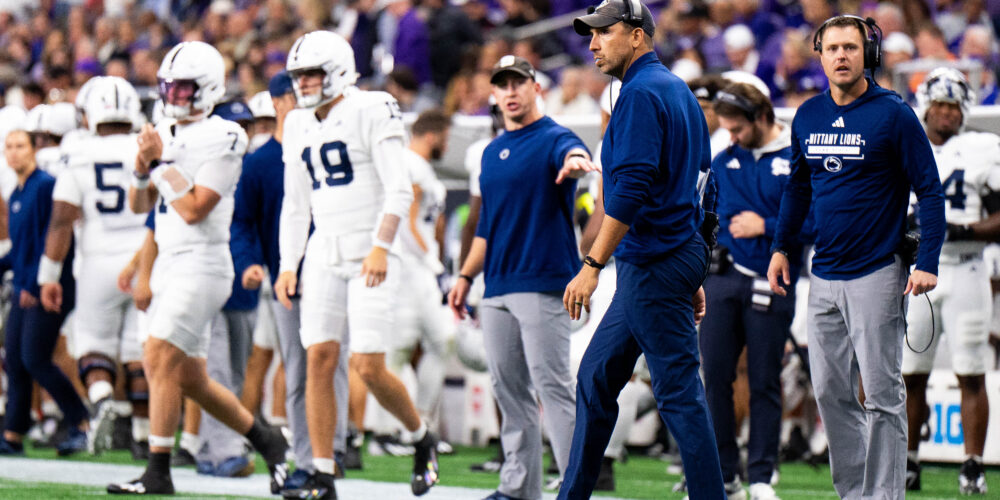
Penn State Football Falls To Northwestern 34-13
The Nittany Lions surrendered 413 yards on 54 carries.
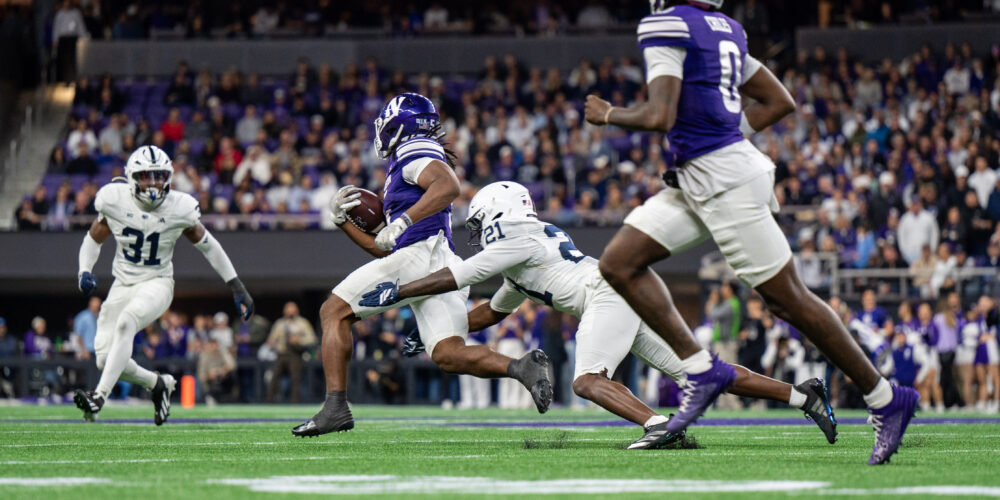
Penn State Football Left Without Answers After Northwestern Pummeling
The Nittany Lions allowed Northwestern to have its highest single-game rushing total since 2003.
Penn State Football Voices Differing Opinions On Physicality In Preparation For Northwestern Matchup
“Don’t want injuries to happen, but I think we’re at a point where we just need to have that physicality in practice and change it up a little bit.”
Penn State Football Remain Favorites Against Northwestern Despite Wisconsin Loss
Fifty-seven percent of bettors have taken the Wildcats’ moneyline.