
Compiling Convenient Modes Of Transportation For Penn State Students Without A Car
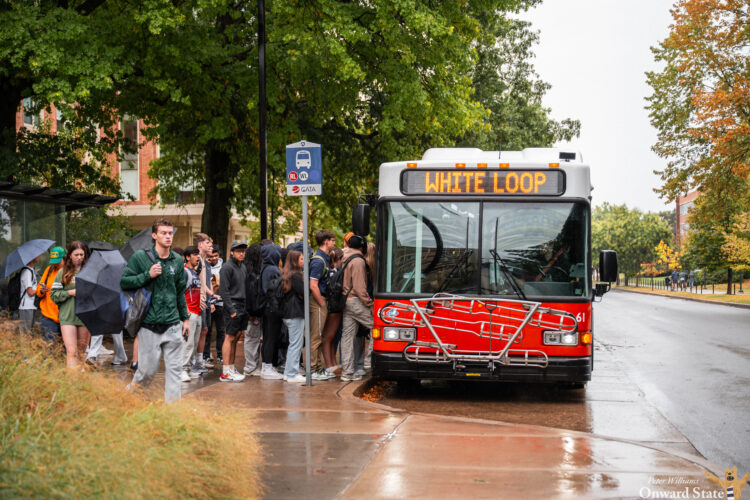
Over the years, folks have debated whether students need a car to get around campus or can get by without one. A car can definitely help with reliability and convenience, but State College offers plenty of alternatives for folks without one.
Having a car on campus has its pros: guaranteed transportation at any time of day, the freedom to decide when and where you go, and the option to travel back home if you feel like it. Along with its flaws, like the minimal parking spots that all seemed to be way overpriced around campus.
Both sides have pros and cons that shape whether folks see one as better or worse. The transportation debate has no clear answer.
However, for folks without a car on campus, several options still exist to get around campus and the areas surrounding State College.
We compiled the five main forms of transportation students use rather than driving a personal car around town.
Campus Transit & CATA Bus
The CATA Bus transportation system is the primary means of transport for students on and off campus for getting to classes, sporting events, club meetings, etc.
Most students choose the free bus loops: the Blue Loop, White Loop, and Red Link. Fourteen other bus routes provide additional off-campus coverage, but some require payment.
The CATA Bus system offers many free or paid rides for students traveling across campus. It also provides transport to farther parts of State College, like Toftrees, North Atherton, and Havershire, for a set $2.50 per ride.
If you are looking for a cheap, efficient way to get around without a car, the CATA Bus system is a great place to get started.
Lyft & Safe Walk
Penn State also provides services for Lyft and Safe Walk as part of its transportation services.
University Park students have access to eight $10 Lyft ride credits each month to use for rides from downtown to select surrounding neighborhoods. Lyft is available to Penn State students from 2 a.m. to 7 a.m. every morning.
In addition to Penn State’s partnership with Lyft, the university offers a Safe Walk program for anyone who wants a companion to walk home late at night.
The number is available on the Penn State Transportation Services website, and the program pairs you with an auxiliary police member to make sure you get home safely.
Both options provide a safe, effective way to help students without access to a car travel back home safely from downtown.
Spin E-Bike Rentals
Another transportation option Penn State offers students alongside the CATA Bus system is the Spin E-Bikes.
E-Bike Rentals are available around campus and in select off-campus suburbs, and folks can access the bikes through the Spin app.
The cost to rent these bikes is a set $1 unlock fee, plus $0.32 per minute you use the bike until you return it to another pickup location.
Spin+ also offers a $4 monthly payment, which gives you no unlock fee and unlimited $4 rides up to 20 minutes long.
E-Bikes provide a quick, easy way to make long walks across campus a little shorter.
Personal Bikes
On a normal school day, you won’t have trouble spotting a bike rider on the street. Biking around campus is a cheap, time-efficient way to get across campus quickly.
However, to ride a bike around campus, it must be registered first. The process is quick and easy and ensures your bike is permitted on campus and won’t get impounded. You can register your bike on the Penn State Transportation Services website.
Riding your own bike also gives you the freedom to go wherever you want. Bike racks are available around campus and State College, so you can always lock up.
Walking
The most popular form of transportation among students is simply walking from one point on campus to another. While it may be the most time-consuming option, it’s also the most convenient because you don’t need anything else to get around.
Walking between classes, or anywhere in downtown State College, gives you a great way to get some cardio and stay more physically active.
Walking around campus is also the easiest way to get around, with little planning and little thought about where or how you will get somewhere.
So, at the end of the day, having a car on campus or not shouldn’t carry so much weight, since both have upsides and downsides that give students reasons to choose one side or the other. But if you’re stuck on campus without a car, plenty of options can get you where you need to go.
Your ad blocker is on.
Please choose an option below.
Purchase a Subscription!
About the Author


Matt Campbell Outlines Changing Roles In Penn State Football Safety Unit
Marcus Neal Jr. has played 11 snaps in the last two games.

Penn State Men’s Hockey Head Coach Guy Gadowsky Blames ‘Arrogance’ for 0-4 Start
Penn State will take the ice on Friday against Canisius, still searching for its first win of the season.

Father Involved In Alleged Penn State Drug Trafficking Case Assigned Different Judge
The 13 other defendants remain with President Judge Jonathan D. Grine.

A Year In Review: Looking Back At James Franklin’s Firing Exactly One Year After The Fact
Is Penn State better off than it was one year ago?