
Penn State Associate Professor Contributing To $20 Million Bioprinting Project
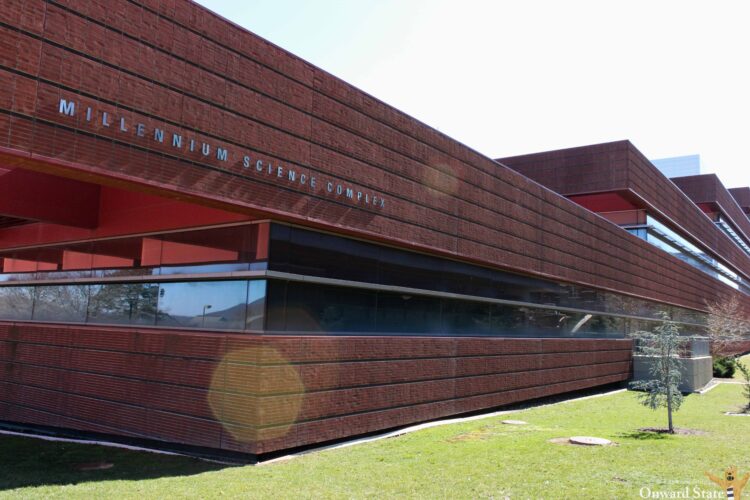
Associate Professor of Biomedical Engineering at Penn State, Xiaojun “Lance” Lian, will contribute to a project aimed at addressing the shortage of compatible liver transplants.
Funded by the Advanced Research Projects Agency for Health (ARPA-H) PRINT program, Genesis Mission is a research project aimed at finding a solution for these patients.
The Terasaki Institute for Biomedical Innovation (TIBI) was granted up to $19.8 million to guide a multi-institution effort to use bioprinting to create transplantable, compatible liver tissue for patients seeking liver donors.
In 2020, about 25,000 people were on the waiting list for a liver transplant. Only 38% of those on the wait list received an organ because the donor and recipient must be biologically compatible. However, due to the shortage of organ donors, many patients with end-stage liver disease are unable to receive the only cure, transplantation.
Lian will support Phase One of the Genesis Mission initiative by researching ways to reduce a patient’s immune response so the body can accept the printed organ.
“Through the project, we hope to engineer an organ that will be a similar size to a real human liver,” Lian said in a news release. “This will be the first time that researchers aim to make a human organ that can be used for transplantation without immune system rejections.”
The initiative, labeled “Prometheus,” was inspired by the Greek Titan whose liver would regenerate daily. The project focuses on developing a universal, immune-compatible liver cell source using cost-effective, scalable culture methods and bioprinting.
The patented technology in Lian’s lab at Penn State lets the team convert sourced stem cells into hypoimmune stem cells that limit immune responses without the traditional immunosuppressants that leave people vulnerable to infection. Once the tissue is built, the team will test its functionality.
If the test ends up successful, the path to liver replacement will become donor-independent and clear up the shortage of thousands of patients who do not receive transplants.
Your ad blocker is on.
Please choose an option below.
Purchase a Subscription!
About the Author


Matt Campbell Outlines Changing Roles In Penn State Football Safety Unit
Marcus Neal Jr. has played 11 snaps in the last two games.

Penn State Men’s Hockey Head Coach Guy Gadowsky Blames ‘Arrogance’ for 0-4 Start
Penn State will take the ice on Friday against Canisius, still searching for its first win of the season.
Father Involved In Alleged Penn State Drug Trafficking Case Assigned Different Judge
The 13 other defendants remain with President Judge Jonathan D. Grine.

Eight Defendants In Alleged Penn State Drug Trafficking Ring Headed To Trial
All three are facing misdemeanor counts of drug possession and paraphernalia.