
The Complicated Legacy Of Joe Paterno 15 Years After His Firing

Fifteen years ago on Monday, a bombshell dropped not just on the college football world but on the entire Penn State community.
On November 9, 2011, after several days of dealing with the fallout from the arrest of former Penn State football defensive coordinator Jerry Sandusky for child sex abuse, the Board of Trustees met to decide the future of the university as we knew it.
Although unanimous, the decision was not made without hesitation. The Board of Trustees not only fired President Graham Spanier but also terminated longtime head coach Joe Paterno, effective immediately.
The news hit State College hard, prompting massive downtown riots from a student body firmly behind a head coach who seemed larger than life.
Everyone knew the time was coming; Paterno had even indicated he would retire after the 2011 season, shortly before he was fired, but being removed in disgrace, without even a proper goodbye, was shocking.
Paterno’s firing was merely the start of what would be a difficult few years for the program. Tom Bradley, after narrowly avoiding the exodus, finished off the season before massive sanctions crippled Penn State football under its new head coach, Bill O’Brien. It would take a half-decade to fully shed those sanctions, a timeline that was way shorter than initially forecast.
Paterno himself was diagnosed with lung cancer just nine days after he was fired. Then, 65 days after that, he passed away on January 22, 2012.
In the nearly 15 years since his death, questions of what his legacy should be have reigned eternal — both within Penn State circles and outside of them.
When Paterno passed away, he still held the record for the most wins by a college football coach, but the NCAA vacated 111 of them in July 2012 when it announced the sanctions. For three years, 409 was officially 298, but a lawsuit from then-state Sen. Jake Corman helped restore them.
Additionally, the statue of Paterno erected outside Beaver Stadium in 2001 was still standing. Six months after his death, it was removed and locked away in storage to never be seen again.
In those 15 years, there’s been a truly tremendous divide in the public opinion of Paterno between Penn Staters and everyone else. Each new generation of Penn State fans and students adds to it.
When a child is born into a Penn State family, one of the first things they learn about the university is Paterno, even long after he was gone.
The announcement that Paterno had passed away is my first sports memory. I was only 4 years old, but I remember the TV on 6ABC News in my South Jersey home when they made the announcement.
Growing up in a Penn State household, I wasn’t regaled with stories about the players who won those national championships in the 1980s. I didn’t learn about LaVar Arrington, Ki’Jana Carter, or anyone who defined the blue and white on the field.
Instead, it was JoePa and what he stood for. His Grand Experiment. The black shoes and basic blues. The standard Penn State football set over his 46 years as head coach. His 409 wins.
I had plenty of Penn State gear growing up, but one item that stuck with me was a shirt that simply said “409,” with a cutout of the bottom of Paterno’s rolled-up khakis and his iconic black sneakers. I still can’t find the design, but my middle school self wore it often.
In my family and for most of the Penn State community, if not all, Paterno is still an icon that embodies this university and what it stands for. Success With Honor, both on and off the field.
Outside the Penn State community? Other college football fans would agree that he embodies the university, but in a significantly darker light.
You don’t have to look far on social media or talk to too many people in the area who aren’t Penn State fans to know the consensus on Paterno. To them, his legacy is Sandusky, and that will never change. Not when the man himself didn’t live long after his former defensive coordinator was arrested.
It creates a disparity that you don’t see in the sports world. Sure, there will always be fervent supporters and harsh critics of figures throughout life, especially in politics, but sports legacies are rarely this divisive.
Even the most controversial players and figures in the sports world usually still have an acknowledgment of greatness and success on one side and an acknowledgment of failure on the other, but you don’t see that with Paterno. It’s all or nothing.
Paterno’s success as a football coach is unparalleled. The most wins in college football history. Two consensus national championships in the modern era as a northeastern school, despite being far from recruiting hotbeds, with four more to claim.
No one else in the sport fits the title of a “leader of men” better. His former players have countless stories and almost unanimously support him to this day.
His goal wasn’t just to win on the football field, but to set up the several dozen student-athletes he has under his wing every year for success after they graduate. Prioritizing academics shaped not just good football players, but good human beings.
Penn State was consistently near the top in graduation rates. Paterno and his wife, Sue, were pillars of the community, raising millions for the university. Through all the academic and booster scandals that other teams faced, Penn State was a symbol of excellence.
Every coach claims it, but Paterno lived it. It’s why he still has the support he does. It’s why Terry Smith wore the “409” button as interim head coach. It’s why Matt Campbell has leaned into embracing him with small gestures.
It’s why that number, 409, is everywhere. It’s in downtown murals; it’s on team apparel; it’s on a specially colored section number at Beaver Stadium. Every Penn Stater knows the number and wears it with pride.
But it also might be a purposeful repudiation of how his legacy has been erased over the last 15 years.
The previous head coach, James Franklin, seemed to distance himself from Paterno at times, which drew ire from the alumni base before the on-field play necessitated his firing.
His statue is still locked up in storage. The only mentions of him on national broadcasts are not in the same conversations as Nick Saban and Bear Bryant, but with Sandusky.
However much Paterno knew about what went down, which continues to be debated 15 years later, is still not totally clear. Sandusky is still alive and fighting in court for his release, and recently made the news when one of his accusers allegedly planned to recant his testimony.
How do you measure the greatness of a man who was the beacon of what you want to see in college sports for 46 years, but one who went out in disgrace amidst one of the worst scandals in college sports history?
Paterno, the man and the coach, is still worth honoring at Penn State.
In an era of college football that’s consistently more focused on money and greed, Success With Honor is a relic of what college football was at its absolute essence; his greatest mistake has defined both him and the university he spent so long trying to prop up.
Thousands of kids who grew up in Penn State families, including me, learned what he stood for and his coaching prowess well before they learned what brought him down. You compare that with anyone else who gets into the sport, and the immediate association with Paterno is Sandusky.
Fifteen years later, it’s still not easy to grasp what his legacy should be in college football.
It likely won’t ever be.
Your ad blocker is on.
Please choose an option below.
Purchase a Subscription!
About the Author

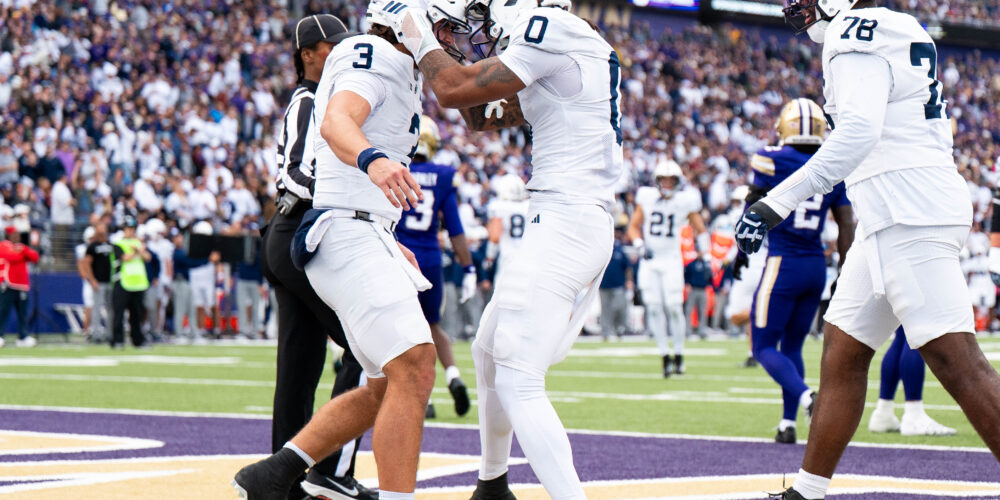
Penn State Football Outlasts Washington 28-25
The Nittany Lions clawed their way to 414 total yards against the Huskies.
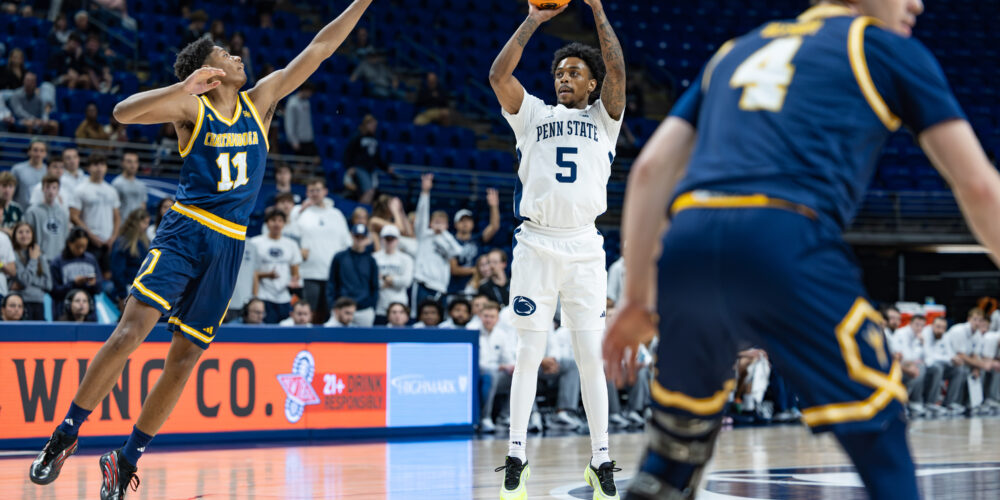
Penn State Hoops Falls To Pitt 82-76 In Annual Palestra Game
The game had a total of 50 fouls between the two teams.
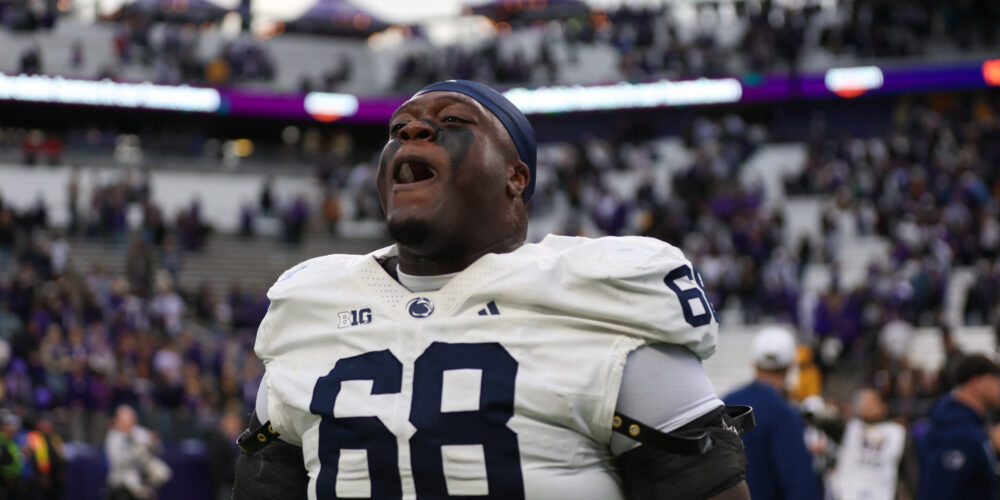
‘End It On Our Terms’: Penn State Football Proves Growth After Finishing Through Adversity
“At the end of the day, we have to go out there and drop our nuts and go out there and win the game.”
The Most Recent No. 1 Or Signature Win For Every Penn State Sport
Penn State field hockey’s big win over No. 1 Northwestern last Friday joined an incredible list.