
The NCAA’s New Eligibility Ruling Could Bring Big Changes To Penn State Wrestling
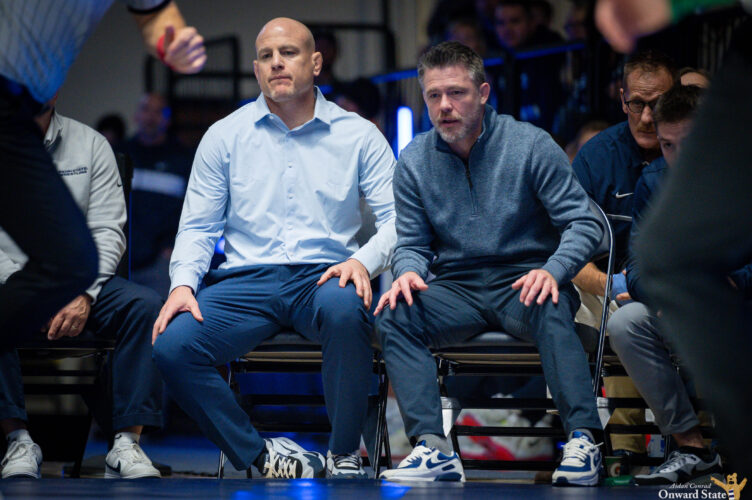
The ultimate secret behind the unbridled dominance of Penn State wrestling over the last 15 years might not be the ridiculous high-end talent, Hodge Trophy winners, or even their stacked coaching staff.
It might just be their depth.
There’s no disputing that, every single year, the deepest wrestling room in the country resides in Happy Valley. The Nittany Lion Wrestling Club not only hosts the current roster but also a wide array of former NCAA champions, Olympic medalists, and stars of the game who help each other hone their folkstyle and freestyle skills. No matter what, that’s always a strong backbone for them.
But regarding the roster, being able to wrestle guys who would start on plenty of programs around the country every day in practice gives them a major advantage.
Back in March, we did a study with the help of WrestleStat that estimated that Penn State’s backups would be a top-10 finisher in the NCAA Championships. A wrestling YouTuber, during the season, estimated that a roster split down the middle could yield two top-three finishers.
They’ve been able to keep this much talent for a few reasons. Beyond the obvious, the opportunity to wrestle in the best room in the country, these guys are sticking around for opportunities to get in the lineup. Some of them are blocked, but you see certain players take redshirting to get opportunities to play down the road, as we saw with Nate Desmond, Masanosuke Ono, and Tyler Kasak in 2025-26.
But that whole system of plugging and playing your deep roster of very talented wrestlers is going to be challenged by the new NCAA rule granting all athletes a full five years of eligibility, eliminating redshirting as a concept.
On paper, you might think this would benefit the Nittany Lions. Guys like Luke Lilledahl, Marcus Blaze, and PJ Duke will get a fifth year, eliminating uncertainty at their weights for an extra year after they eventually graduate. With all three capable of being national champions in 2027 and having at least two additional years of eligibility after, why would this be a bad thing?
Well, because redshirting can no longer be used, it’s no longer a matter of using five years to fit your top guys into the lineup four times. Guys who used a redshirt already essentially wasted a year of eligibility. Guys who are currently enrolling or in weights that could involve wrestle-offs might be staring down the barrel of wasting a year of eligibility.
Most guys with All-American talent are naturally going to look for opportunities to wrestle, but Penn State has been able to retain a lot of that talent because of its ability to promise a spot in the lineup down the road. Getting to wrestle here for a year or two might be worth sacrificing another year or two on the bench.
Think about the position Kasak is in. He lost the 157-pound wrestle-off to true freshman PJ Duke and redshirted, taking an entire year off from folkstyle after finishing third at the NCAA Championships in 2024 and 2025.
A potential plan entering the 2026-27 season was Duke and Kasak switching places to maximize both of their eligibility, with 165 opening up the following season. But with a redshirt unavailable for Duke, that’s off the table. They’ll likely wrestle off at the weight again, and if Kasak loses, he’ll be down to just one year left after another season as a backup. Would he enter the transfer portal afterward?
The same can be asked for Joe Sealey, who’s spent his first two years on the bench while showcasing his ability at folkstyle tournaments during the season. He’s likely not in a position to start next year, but the extra eligibility might also block him from eventually playing. Does he want to spend his final two years likely on the bench?
Connor Mirasola is another talented wrestler who’s been pushed to the bench. The redshirt freshman did great work while Josh Barr recovered from a rib injury early last season, but spent the rest of the year riding the pine. It seems he’ll look to compete with his twin brother at heavyweight in 2026-27 with Barr firmly entrenched at 197, but if he loses? He’s an All-America talent spending Year 3 on the bench.
What does eligibility look like for Masanosuke Ono? He’s almost certainly going to fill in at 133 or 141 this year, but does this ruling give him two years? If so, could Braeden Davis be squeezed out? He was fortunately able to compete in 2025-26 after initially looking to redshirt behind Aaron Nagao, but he’ll only have one year left after 2026-27.
Nate Desmond is also in that boat. He and the coaching staff believe that 133 or 141 is his long-term home, but if Blaze has another four years and Ono has two more, is he willing to wait until 2028-29 to start?
There are even more talented wrestlers who are now seemingly losing opportunities. William Henckel and Asher Cunningham had great freshman years at under-the-radar tournaments and are likely the future at 174, but both of them are now on the same clock. The year one of them starts, the other will sit.
Incoming freshman Jayden James looks like he has the talent to compete for a national championship on Day 1, and he might get that opportunity to do so at 174 pounds with Levi Haines graduating, but there exists a slim possibility that the massive lawsuit by graduating seniors grants all of them a fifth year, which would allow Haines to burst back into the room and go for a third national title.
That would almost certainly push James to the bench for a wasted year. Zach Seyko of Locked On Nittany Lions proposed a bold potential solution for James to take advantage of age-based eligibility by deferring a year and beginning his five-year clock in 2027-28, but that’s not easy to convince someone to do.
It’s not all bad, though. At least for 2026-27, Penn State’s depth will be stronger than ever.
Every wrestler who’s not in the starting lineup will now be able to compete in non-dual events to stay ready, like the Southern Scuffle and Black Knight Invitational, which guys like Ono, Kasak, and Davis missed out on last season.
This also allows the team to field the best possible lineup in every single dual meet. Nagao’s recurring shoulder injuries early in the season and the reluctance to pull Davis and Ono’s redshirt until it was absolutely necessary caused Cael Nasdeo to start two dual meets early in the season. In this new scenario, they can start the true No. 2 on the depth chart and not worry about the ramifications.
It might also embolden head coach Cael Sanderson to mix up the lineups on certain days if a guy is a bit under the weather or has a nagging issue they could wrestle through, but wouldn’t be 100%. Being able to go to a gamer like Kasak or Sealey if Duke is sick, or to Connor Mirasola if Barr has a nagging injury, would be big for maintaining the standard of excellence in a given dual meet.
Ultimately, the new rule changes have a chance to be a real negative for the program’s unique ability to build a ridiculously deep room, but it’ll come down to just how enticing the ability to train in the best wrestling room in the United States has to offer. These guys all have ambitions beyond college, and this is the best place to hone a future freestyle career.
For this year, it’ll be a major boost. By next March, we’ll know if the change starts to disperse talent across college wrestling.
Your ad blocker is on.
Please choose an option below.
Purchase a Subscription!
About the Author
Penn State BOT Finance Committee Recommends Sale Of Wilkes-Barre Campus For Golf Course
Some academic buildings will be left to Misericordia University.
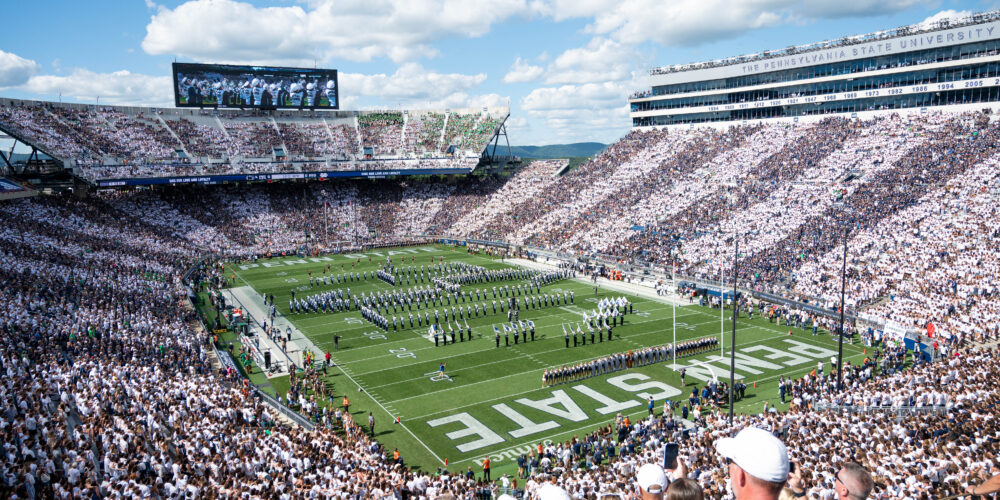
AT&T To Upgrade Beaver Stadium Cell Service For 2027-28 Season
The upgrade’s goal is to make mobile service more reliable during football games and other events held at Beaver Stadium.

Penn State History Lesson: The Unsolved Murder Of Dana Bailey
Bailey was found dead in her apartment on Allen Street in 1987. Her case has still not been solved.
Penn State Football Hoping Depth Steps Up After Max Granville’s Season-Ending Injury
“I just feel like that group’s got a chance to make tremendous strides each week.”