
Why Can’t Penn State Hoops Be Competitive In The Big Ten?
July is the most boring month on the college sports calendar, simply because there are exactly zero sports underway. As we wait for the fall calendar to begin in August, there has been increasing coverage of the major sports with media days and offseason coverage.
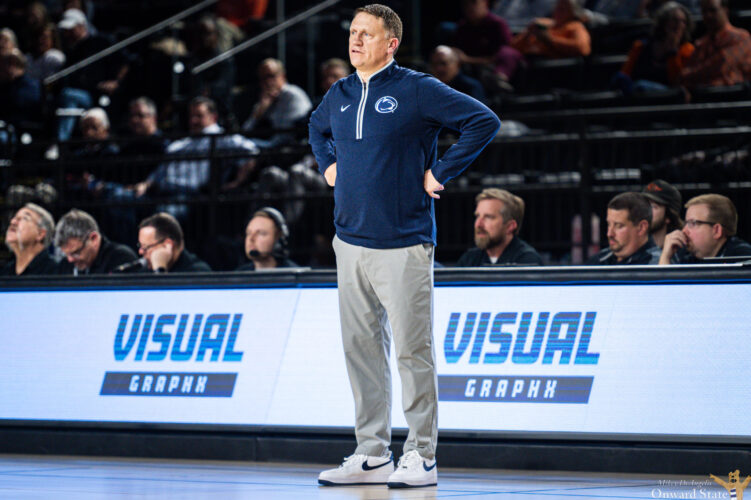
One program that you likely didn’t expect anyone to be talking about in late July is Penn State men’s basketball, but they’ve made the news after the Nittany Lions’ athletic director Pat Kraft’s comments on the program’s funding drew the ire of basketball fans everywhere:
These statements have breached containment, as they say, as multiple national college basketball outlets and reporters have chimed in with their knowledge of the sport and their NIL capabilities, consistently stating that head coach Mike Rhoades has been given a raw deal with a roster that is hopelessly behind in terms of funding.
To say THIS as the AD.. is wild. Zero effort to even trying more funding/creativity.
— Ryan Hammer
If I'm Mike Rhoades I want out & if I'm a big school in need of new coach next year, Mike Rhoades is atop the list. Elite coach at VCU that will be great in any half funded program. https://t.co/cs4jf6ebXJ(@ryanhammer09) July 29, 2026
The average Big Ten roster, according to The Athletic, will spend $14.3 million on their 2026-27 roster, a figure that Penn State is undoubtedly well beneath. Their inability to close the deal on five-star recruit Dylan Mingo, along with their loss of their two leading scorers, Kayden Mingo and Freddie Dilione V, to Baylor and Georgia, respectively, shows that much.
The team has had to completely reconstruct its roster through the transfer portal after its grand development experiment crashed and burned, and has pursued short-term upside internationally and among mid-major talent, most notably by landing Miami (OH) wing Brant Byers. Such a coup of Byers was surprising, but unlikely to have been as much in NIL as transfers pursued by fellow Big Ten institutions.
But despite pursuing more experienced talent this time with more urgency to win in 2026-27, it still seems quite unlikely that the team will compete in one of the nation’s premier basketball conferences, let alone make the NCAA Tournament for the first time in four years. As Kraft’s comments have reached more ears than anyone could’ve expected, the prevailing question has been this.
“Why can’t Penn State, a school with such bountiful resources, alumni, and prestige, build a consistent basketball program?”
The answer is multi-faceted, but in simple terms, it’s hard to build a program like basketball from the ground up in the NIL era with an alumni base that isn’t that interested in the sport, especially when they’re trying to make investments around the athletic department to be more well-rounded.
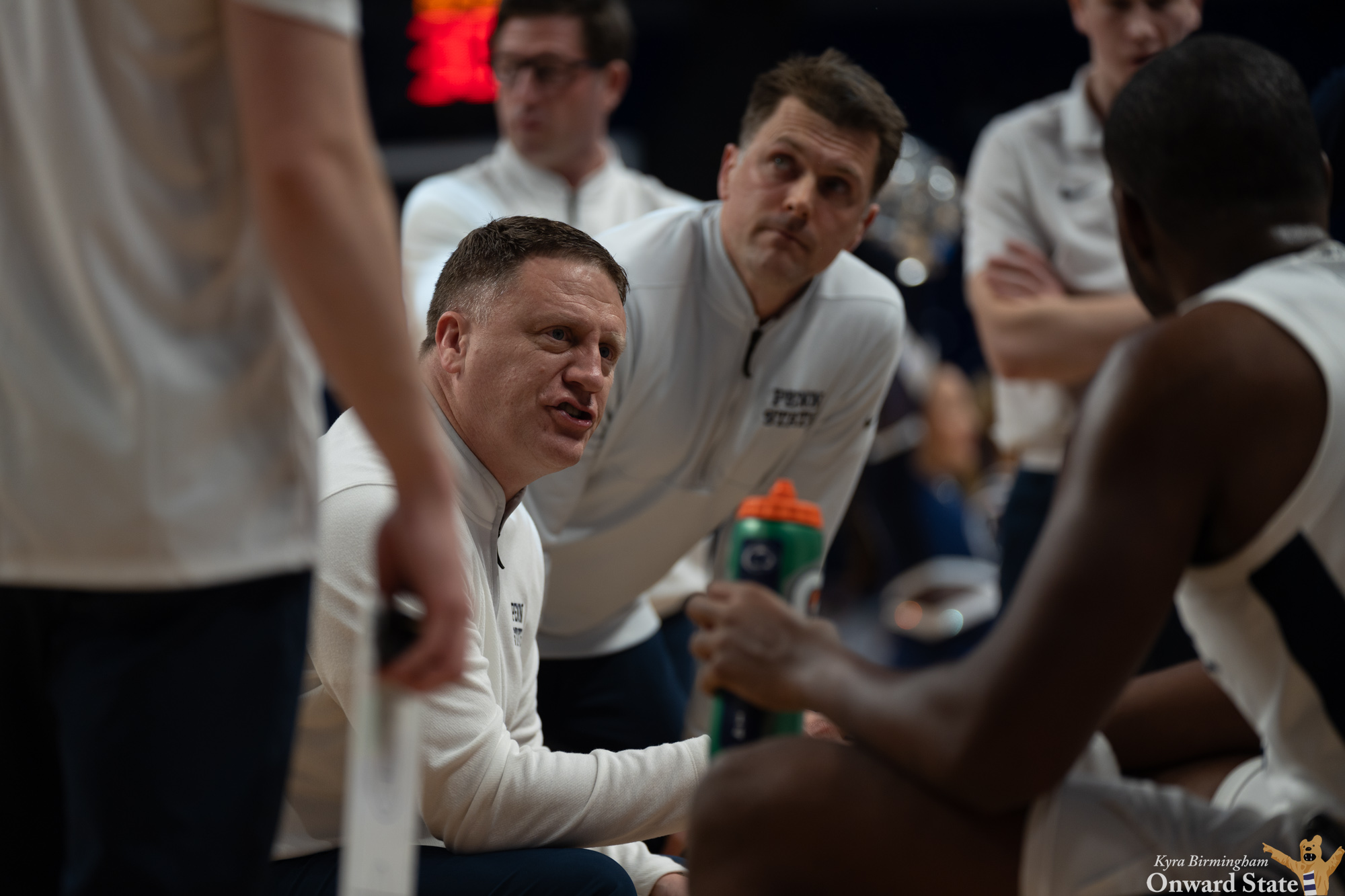
The State of the Program
Penn State men’s basketball is profitable, regardless of how it may sound. Behind football, they are the only other sport to turn a profit in fiscal year 2025.
But that profit is absolutely minuscule compared to other schools, which use the popularity of the sport to make it a revenue sport along with their football programs. Very few other sports turn a profit; even sports like wrestling, which Penn State seems to have a monopoly on, will turn a deficit.
In 2023, a year when Penn State’s attendance was up due to their inspiring rise from the bottom, they were still dwarfed by some of their rivals in basketball revenue.
Penn State basketball has always operated under the Field of Dreams principle, “If you build it, they will come.”
In down years, the Bryce Jordan Center is empty. In their more productive seasons, the arena is full during Big Ten play.
Penn State, despite playing in an arena that can seat 15,000, has not averaged 10,000 fans per game in 25 years. Their high-water mark since 2001 was in the shortened 2019-20 season, the best season in recent program history, in which they averaged 9,190 fans and sold out multiple times.
In 2024-25, a season that had excitement until multiple late-game meltdowns doomed them in the heart of the Big Ten calendar, average attendance cratered to 7,700. Last season? It was sub-6,000, the lowest total for the team since 1993, when the team still played at the significantly smaller Rec Hall.
The sheer amount of empty seats is unprecedented in the sport. The only Big Ten schools with lower average attendance was Northwestern and USC, but their capacity percentages tell the clearer story:
Northwestern (77.5%)
USC (54%)
Penn State (38.2%)
The only Power Five schools that had a lower capacity percentage than Penn State in 2025-26 were Seton Hall (37.4%), California (35.5%), and Georgetown (28.9%). It’s an inner circle of futility, even more amplified by the fact that Seton Hall and Georgetown both share arenas with professional teams in Newark, New Jersey and Washington, D.C.
When the BJC is arguably more of a wrestling arena than a basketball arena, that encompasses the state of the program. The wrestling team has drawn 67,592 fans in its last five duals in the Bryce Jordan Center, a total that equals 11.6 average-attended basketball games. They’ve drawn two crowds of at least 15,900 in the last 18 months, more than Penn State basketball has in its entire history.
Unlike other fledgling programs, there’s not enough history and memories to keep the program afloat in Happy Valley. Fewer ticket sales mean less revenue, meaning you’d have to dip further into the athletic budget and rely on donors and alumni to keep up with the times.
And in that regard? Those donors just don’t see basketball as a priority.
Donor Priorities
Penn State is, first and foremost, a football school.
That’s no excuse to just abandon the rest of the athletic program, but it is something that inhibits spending elsewhere. It’s generally accepted that it takes over $30 million in player funds to field a football team that wants to contend for a national title. In hiring Matt Campbell, the athletic department has guaranteed him that $30 million figure to build the roster.
That, alongside the coaching staff expenses and the truly massive Beaver Stadium renovations, is going to command a vast majority of athletic resources. The standard that James Franklin set at this program is lower than Kraft expects, as evidenced by his firing despite a great track record and his ability to fully pull the team out of the Jerry Sandusky sex scandal blowback and into perennial Big Ten contention.
At pretty much every other school, basketball is the second priority. Hell, even at Penn State, basketball has the second-largest revenue stream and second-largest investment, but the difference between what happens at Penn State and what happens elsewhere is that they aren’t willing to go the extra mile because basketball has never been as important here as it’s been elsewhere.
The programs that big basketball fans want to cut back on to invest more in a more popular sport are hockey and wrestling, but those sports have tremendous alumni support. Terry Pegula, a Penn State alum and owner of the Buffalo Sabres, built the hockey program from the ground up, while wrestling’s Pennsylvania hotbed has necessitated an investment in wrestling.
At Penn State, the community buzzes more for these two sports anyway. There’s no doubt that a basketball investment could make them a power again, but Rec Hall will always be buzzing for the wrestling team, even after Cael Sanderson’s reign of excellence ends one day. Pegula Ice Arena has been filled to the brim the last several seasons.
Basketball’s schedule, which consists of many weekday games, just isn’t conducive to a program that’s in the middle of nowhere. Philadelphia and Pittsburgh are over three hours away. The team’s futility, coupled with the isolation of State College and the basketball schedule, creates its own attendance issues.
What It Would Take To Build A Competitive Program
As much as we’d all like to think money is infinite, it isn’t.
If you were the athletic director and you wanted to make the basketball program a priority that it has never been at this university, you have two options. Get the NIL money from a generous donor or disperse funds from other programs to get more for basketball.
The first option isn’t happening.
If there were a Penn State alum who really loved basketball, they would make sure the program had the funds to get whoever they wanted. We’ve produced the most CEOs of any public university in the United States, so it’s fair to think that the brigade is not coming if they haven’t already shown up.
So what about the second? Well, good luck with that.
We’ve already addressed that the athletic department isn’t shutting the water off for hockey and wrestling, even if their revenue streams are way lower than basketball. The alumni base loves wrestling, and Pegula’s investment in the hockey program is just not going to be abandoned after the nine figures he poured into it.
So where else can they make money? Looking at the revenue chart, they could make up $10 million by cutting unpopular sports!
But the M.O. of the Penn State athletic department for a long time has been, outside of investing a ton into a formidable football program, having a large, diverse, and successful department across all sports.
Some universally unprofitable sports, such as volleyball, lacrosse, hockey, and wrestling, are where Penn State thrives. They have one of the best women’s volleyball programs in the country with decades of success. Both lacrosse teams are nationally relevant, with the men’s team perennially making deep runs. None of these sports are universal; they are regional niches.
Think about this. Let’s compare the Penn State athletic department to an SEC athletic department.
The SEC does not sponsor wrestling, hockey, men’s gymnastics, men’s soccer, lacrosse, field hockey, or men’s volleyball. Very few schools, if any, have any association with these other sports like Penn State does with the AHA in women’s hockey or the EIVA in men’s volleyball.
In the SEC, it’s all about football and basketball, with baseball as a distant third. It’s a clear hierarchy, and unlike with Northeast institutions like Penn State, almost all of the resources are dedicated to two sports. Their alumni do not have these surrounding interests. It might sound egotistical to act like Northeast schools are above these SEC schools for diverse athletic departments, but these are the facts.
The truth of the matter is that there’s just not going to be a competitive Penn State men’s basketball team for years on end until someone is willing to personally fund a large part of the personnel with NIL. It’s a new era in college sports, and now more than ever, building a stable program in a big sport takes a lot more resources.
Your ad blocker is on.
Please choose an option below.
Purchase a Subscription!
About the Author


Hundreds Gather Downtown For No Kings: Bank The Vote Demonstration
The event culminated with a march to the State College Municipal Building to encourage early mail-in voting before midterms.
Penn State Football Names Team Captains Against Michigan
Rocco Becht, Anthony Donkoh, Kooper Ebel, and Blaise Sokach-Minnick received the honor.
NWCA All-Star Classic To Be Held At Rec Hall On November 24
For the second time in three years, 20 of college wrestling’s best will be at Rec Hall for the All-Star Classic.