
Is A Nuclear Reactor Secretly Behind Penn State Football’s Injury Problem?

The San Francisco 49ers have had a long run of unlucky injuries. Year after year, the roster of All-Pros, Pro Bowlers, and stars slowly dwindles toward the back end of the season. It has been a running joke within the NFL community.
Over the past few seasons, conspiracy theorists and NFL fans have pushed a narrative about why this has been happening. They allege that it isn’t just bad luck, poor conditioning, and tough physical play, but rather that the players’ cells are changing on a molecular level.
The 49ers have trained in Santa Clara since the late 1980s; a few years later, an electrical substation was built right next door.
The Silicon Valley Power substation sits on the other side of the fenced practice facility outside Levi’s Stadium. The viral theory is that said substation across from the practice facility could degrade collagen, weaken tendons, and cause soft-tissue damage.
The theory has been shot down by various scientists and medical professionals.
Frank de Vocht, a professor at the Bristol Medical School in England, specializes in epidemiology. He is widely considered to be a leading expert on how EMF affects humans, and he is not convinced in the slightest by this theory. He told the Washington Post that the theory is “nonsense.”
But what if it wasn’t nonsense? Many college football teams have a long history of injuries at their campus practice facilities, as injuries are an unfortunate part of the game.
However, close proximity and perhaps even molecular exposure to a nuclear reactor on campus are not part of the game.
The Penn State Breazeale Reactor, or PSBR, is the nation’s longest-operating university research reactor. The core is located in a 24-foot-deep pool with 71,000 gallons of demineralized water. The reactor is a 1-megawatt TRIGA reactor, designed specifically for research, and can safely produce controlled amounts of nuclear energy and neutrons.
The reactor can also produce neutron beams that scientists use to examine materials and create detailed images of objects that cannot be easily studied with normal X-rays.
Just a short distance away, Penn State football has been experiencing an entirely different kind of chain reaction: one injury after another on its own turf.
Head coach Matt Campbell recently announced that pass rusher Max Granville suffered a season-ending injury in practice ahead of the Temple game. He joins Armstrong Nnodim and Alijah Carnell on a growing list of players who came down with injuries at practice this season.
Last winter in preparation for the Pinstripe Bowl, Alex Tatsch went down with an injury that he is just now almost fully recovered from.
I think every Penn State football fan remembers where they were when they heard that Tony Rojas suffered a torn ACL during practice late last September.
So, is the Breazeale Reactor secretly turning Penn State football players into nuclear science experiments? Of course not.
There is no evidence that the reactor has anything to do with Penn State’s injury problems, just as there was no evidence supporting that claim in San Francisco. The players are not taking in nuclear energy, and their injuries aren’t just their bodies reacting to their new nuclear superpowers.
For the past 70 years, the reactor has produced only science.
Football is a violent and physically demanding sport. Players have been getting hurt and, unfortunately, will keep getting hurt for the foreseeable future. Sometimes it happens in a game; sometimes it happens in practice. No amount of detective work can change the fact that injuries are simply part of the game we all love.
And while it may be easier to blame a one-megawatt nuclear reactor sitting across campus, the reality is much less exciting.
Penn State football players are human beings playing an incredibly physical sport. Setbacks are inevitable, but what matters is what happens next. Injuries have always been part of football, but so has the tradition of Penn State players finding ways to push through setbacks and continue moving forward.
The Breazeale Reactor will continue to keep producing scientific discoveries, and Penn State football will keep producing players willing to fight through adversity.
Your ad blocker is on.
Please choose an option below.
Purchase a Subscription!
About the Author


Penn State BOT Finance Committee Recommends Sale Of Wilkes-Barre Campus For Golf Course
Some academic buildings will be left to Misericordia University.
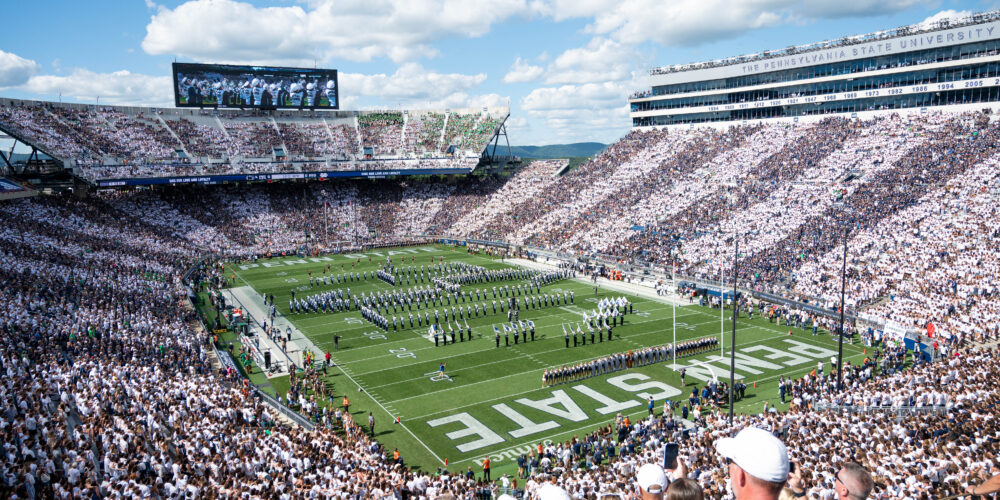
AT&T To Upgrade Beaver Stadium Cell Service For 2027-28 Season
The upgrade’s goal is to make mobile service more reliable during football games and other events held at Beaver Stadium.

Penn State History Lesson: The Unsolved Murder Of Dana Bailey
Bailey was found dead in her apartment on Allen Street in 1987. Her case has still not been solved.
UPUA’s 21st Assembly Swears Multiple Members Into New Positions
The assembly also passed a bill regarding Save A Life Day.