
Big Ten Announces NIL Economic Framework In Preparation For Federal Legislation
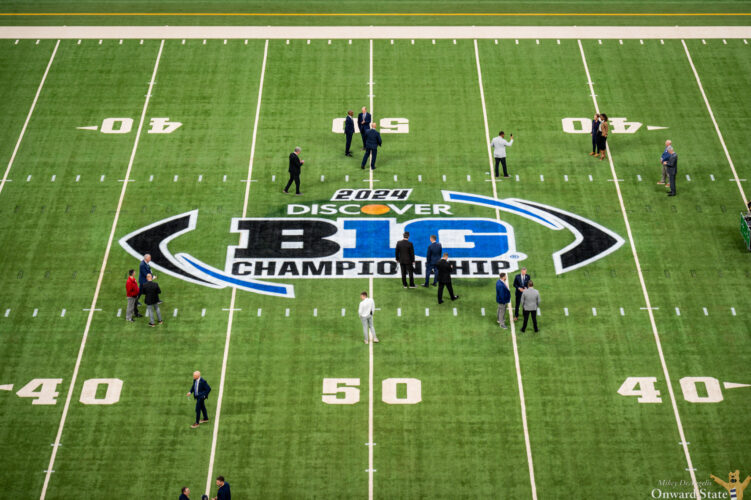
A complicated, half-decade-long arms race surrounding Name, Image, and Likeness (NIL) without any real cap or anything to limit it is coming to an end, at least in the Big Ten.
After a Wednesday meeting among Big Ten chancellors and presidents, the conference has unanimously agreed to adopt an economic framework that will impose a hard salary cap on NIL spending and limit outside involvement.
This system is a major component of the Protect College Sports Act, a bill expected to reach the House of Representatives in early November, when Congress reconvenes after the 2026 midterm elections.
In a statement from the Big Ten Council of Presidents and Chancellors, Pamela Whitten said the conference is fully preparing for such legislation to pass in the coming months:
“While we await the passage of the Protect College Sports Act, which has our full support, it is imperative our member institutions can begin to plan, budget and build their rosters approximating the act’s economic structure,” She said.
“Our institutions remain in full support of the Protect College Sports Act and this rule not only allows for a much smoother transition into the policies put in place by the act once it passes, but demonstrates our commitment to it.”
While some have been skeptical that legislation will reach President Donald Trump’s desk before a new Congress is sworn in on January 3, a recent push from the NCAA and its institutions suggests the legislation will be a priority during the lame-duck period.
The economic framework, which the Big Ten is adopting effective immediately, significantly raises the limit on how much institutions can provide to their student-athletes through NIL, from $21.5 million to $49 million, but in doing so limits outside boosters’ ability to artificially inflate roster valuations.
Of that $49 million, only $27.5 million can come from an institution. Every program, no matter the size, will be entitled to $5 million in guaranteed funding for women’s and Olympic sports, as well as $21.5 million from the House vs. NCAA settlement that brought about revenue sharing.
The main goal is to limit third-party NIL spending, which has allowed football programs like Ohio State, Texas, Oregon, and Texas Tech to field rosters worth close to $50 million, further widening the divide between the top and bottom of the sport.
Other sports will be affected, including basketball, where insiders believe the limits would squeeze spending to $8-12 million, rather than over $20 million, as some institutions are doing.
The Big Ten, who figures to be the first of several conferences to take this bold step before federal legislation is signed into law, swears there will be “escalating financial penalties and other disciplinary measures will be imposed by the conference for any violations.”
Your ad blocker is on.
Please choose an option below.
Purchase a Subscription!
About the Author
What Each Pennsylvania Governor Candidate Thinks About Penn State Football
Each candidate gave Onward State their thoughts on this season, Matt Campbell, and the team’s future.
Penn State Men’s Hockey Forward Justin Poirier Takes Hot Start Into Big Ten Play
After an impressive start to his Penn State career, Poirier is preparing for the Big Ten competition that sparked his transfer from Maine.
‘The Biggest Thing Is Just Having Fun’: Penn State Football Emphasizing Togetherness After Bye Week
In a season that hasn’t gone to plan, the Nittany Lions want to get back to the basics of the game.