
From Penn State To The NHL: Penn State Alumni Jesse Finver Finds His Place In Sports Media
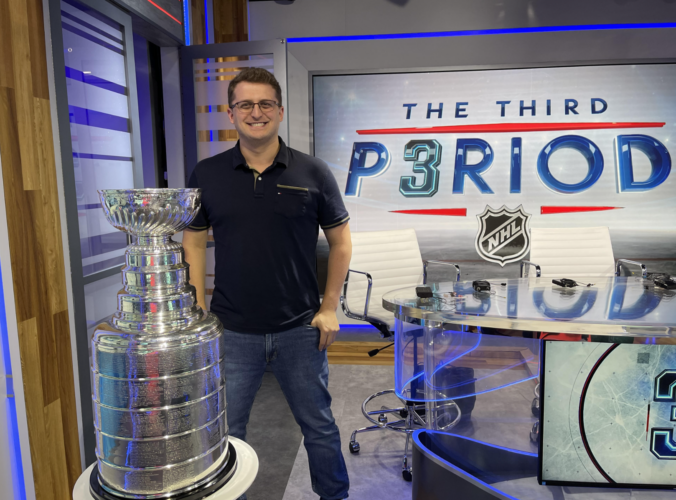
Jesse Finver didn’t begin his career in sports media on a straight path. It began with a major change at Penn State, a college radio show, and a willingness to explore opportunities that eventually took him from local television news in Mississippi to the NHL’s digital newsroom in New York City.
Now working as an NHL producer, Finver shapes how fans experience hockey through NHL.com and its digital platforms.
However, Finver was once a Penn State student trying to turn his interests in sports, writing, and broadcasting into a professional career.
“I just love sports,” Finver said. “Yeah, I mean, it’s the best.”
For Finver, sports offered more than competition. It gave him a sense of community and the chance to be part of something larger than himself, an interest that ultimately guided his professional journey.
Finver initially enrolled at Penn State as a business major, spending his first two years studying a subject that did not quite fit.
“I wasn’t really loving it,” Finver said. “I wasn’t good at it. I wasn’t good at math. I wasn’t. I just … it wasn’t for me.”
That realization prompted Finver to reconsider what he wanted from college. A graduate of Westfield High School in New Jersey, he had previously written for his high school newspaper, The Hi’s Eye, where he developed an interest in journalism.
After talking with his family, Finver conceded that a journalism major would best bring together all his interests.
“Somebody was like journalism — you love to talk, you love to write, you love sports,” Finver recalled. “This feels like a no-brainer.”
Finver switched from pre-business to pre-communications during the spring of his sophomore year. Although he did not immediately know which area of journalism he wanted to pursue, Finver eventually found his way to broadcast journalism.
From then on, Finver’s college experience became an opportunity to experiment, learn, and develop his skills.
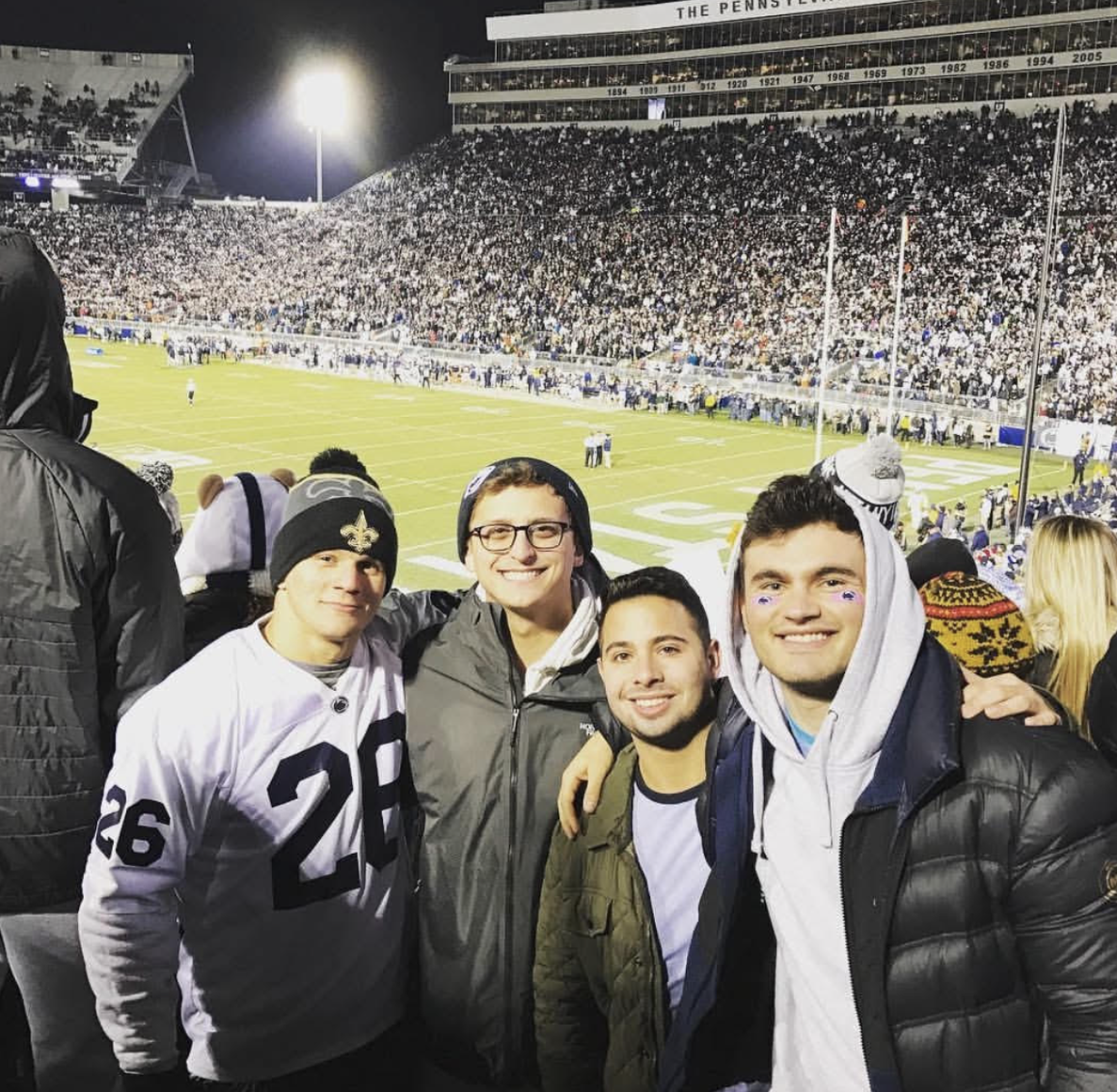
One of Finver’s most pivotal experiences began with a fraternity brother, who hosted a radio show through CommRadio, Penn State’s student-run radio station. Finver asked to join the show, starting with a short segment and gradually becoming more involved.
He quickly discovered that he enjoyed the work.
“I fell in love with it,” said Finver.
Eventually Finver hosted his own radio show and began calling live sporting events, including lacrosse, baseball, basketball, and ice hockey. Those opportunities let him experience different aspects of broadcasting while learning to communicate with an audience in real time.
Finver also participated in election night radio coverage in 2016, gaining experience beyond the sports world. Looking back, he wishes he had become involved sooner.
“It’s one of my regrets, not being able to join sooner and start this whole process sooner,” he said.
Still, CommRadio provided the foundation for a career that would eventually combine journalism, sports, and digital content production.
When Finver graduated from Penn State, he wanted to work for a major sports broadcaster rather than a professional sports league.
“The major career goal was to be on SportsCenter,” he said.
Finver envisioned working for ESPN, CBS, or Fox, ideally announcing games and covering sports on a national stage. However, his first steps in the industry took him somewhere less familiar.
After graduation, Finver received two job offers: one in Ishpeming, Michigan, and another in Hattiesburg, Mississippi. He chose Mississippi partly to avoid Michigan’s harsh winter temperatures.
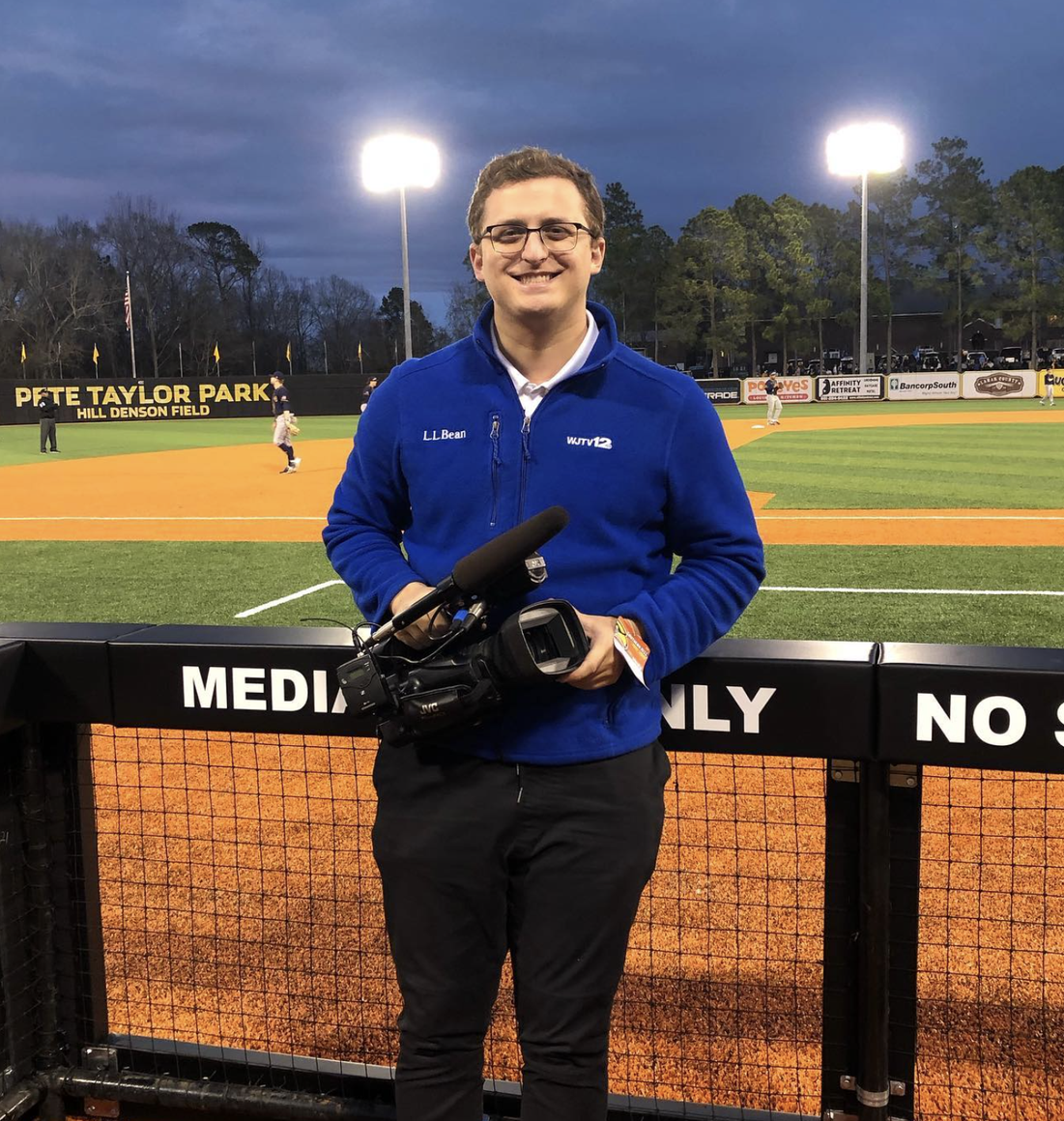
Finver worked for three years in local television news, covering everything from sports to weather and general news.
“Literally whatever they wanted me to do, I did,” Finver said. “But my main love was doing sports.”
The position gave him experience across different areas of journalism, while sports coverage remained his favorite part of the job.
College baseball, in particular, became a highlight. Covering teams such as Southern Miss, Mississippi State, and Ole Miss let him experience the close-knit community that surrounds college athletics.
Finver especially enjoyed the relationships he built with other reporters during tournaments and other extended assignments.
“It was just such a community,” Finver said of covering the sport. “It was a bonding experience getting to cover the College World Series.”
But Finver’s time in Mississippi also coincided with the beginning of the COVID-19 pandemic. As sporting events shut down, Finver covered hospital press conferences and navigated uncertainty about his future.
His contract was approaching its end, his lease was expiring, and it was unclear when sports would return.
“I didn’t know what was gonna happen,” he said.
Although he considered other opportunities, including positions in Tulsa, Oklahoma, and San Francisco, Finver ultimately decided to move back home to New Jersey.
At the time, it felt like the end of one version of his career. Instead, the move opened doors to opportunities he hadn’t anticipated.
“It led me to so many things,” Finver said. “It led me to my girlfriend. It led me to the NHL. It led me to New York, living in Hoboken and working in New York City.”
The experience reinforced an important lesson: A career does not always unfold according to the original plan.
Today, Finver works as a producer for the NHL, helping manage and publish content across the league’s website and app.
Finver’s role combines editorial judgment, digital production, and collaboration with writers, copy editors, photographers, and video teams. Rather than reporting every story himself, he helps transform incoming material into the content fans ultimately see online.
“We have our day side and our night side team,” Finver explained.
When Finver first joined the organization, he worked the night shift, sometimes staying until 2 or 3 a.m. to cover late West Coast games and ensure recaps and breaking-news alerts were published promptly.
He now works a more traditional daytime schedule, starting by preparing the website and app for the day’s hockey coverage.
Writers across the country report on teams, attend morning skates and gather updates. Copy editors review their stories before the production team prepares the material for publication.
“As a producer, I’m taking the text that I get, and I’m putting it into our content management system,” Finver said.
Ultimately, that involves selecting photographs, adding video, organizing stories on the website, and determining which content deserves the most prominent placement. Producers also handle search engine optimization and other behind-the-scenes details that help readers discover coverage.
Creativity is another part of the job. Finver and his colleagues brainstorm playful headlines, drawing inspiration from the pun-filled back pages associated with New York tabloids.
The work requires both editorial judgment and an understanding of what will capture fans’ attention.
“We’re trying to determine what the best road is to connecting with our fans,” he said.
For Finver, producing content is ultimately a team effort.
“It really is a collaborative group effort,” he said. “I feel like everybody has an essential role.”
As sports consumption increasingly moves to digital platforms, Finver and his colleagues must consider not only what information fans need, but also how to encourage them to engage with it directly.
Finver describes the current media environment as “an instant gratification society,” where breaking news, notifications, and digital headlines play an important role in reaching audiences.
The biggest challenge is making league coverage relevant to fans whose interests may be focused on their own teams.
“How are we going to connect with the fans and get them to care about what we’re putting out there?” said Finver.
That question becomes especially important during major international events, when the NHL’s coverage expands beyond the regular season.
Two projects stand out to Finver: the 4 Nations Face-Off and Olympic hockey coverage. Both required extensive coordination and gave the league an opportunity to reach audiences in new ways.
For the Olympics, the NHL worked with its digital products team to develop a dedicated digital experience while its regular league schedule paused.
“We shifted our entire focus to the Olympics,” Finver said. “We had an entire site dedicated.”
The project required collaboration across departments, including public relations, digital products, editorial teams, and the commissioner’s office. Writers covered the competition, while producers helped organize and publish the final content.
The work involved long nights and careful planning, but Finver found the experience rewarding.
“That was awesome,” he said. “That was a lot of fun to be a part of something like that.”
He was equally proud of the 4 Nations Face-Off, which brought together teams from Canada, Finland, Sweden, and the United States.
For Finver, the tournament showed how international competition could renew interest in hockey and bring fans into conversations that extended beyond their usual team loyalties.
“Seeing hockey grow in real time was awesome,” he said.
Despite working for a major professional sports league, Finver remembers the uncertainty and difficult decisions that shaped his own career. For Penn State students interested in sports media, he encourages them to take advantage of campus opportunities while understanding the industry’s realities.
His advice begins with passion.
“Make sure that you’re passionate about what you’re doing,” Finver said. “Do it because you want to be doing it.”
Finver encourages students to explore opportunities with ComRadio, Penn State’s student television organizations and publications such as Onward State. Those experiences can help aspiring journalists develop practical skills before entering a competitive job market.
But he also cautions students not to expect immediate success.
“It’s a scary job to be a journalist,” he said, noting the challenges of appearing on television, moving to unfamiliar cities and working nights and weekends.
Finver described the early years of his career as a grind, with long drives between sporting events, demanding schedules, and time away from family and friends.
Still, he would not trade the experience.
“I wouldn’t trade my time in Mississippi for anything; I really grew as a journalist there,” he said.
For Finver, those challenging years helped him grow as a journalist and prepared him for the opportunities that followed.
Finver’s journey from a Penn State radio show to the NHL demonstrates that breaking into sports media is rarely a straight line. It requires curiosity, persistence, and a willingness to take opportunities that may not initially resemble the ultimate goal.
“Make sure you know what you’re getting yourself into,” Finver said. “But also know that when you are doing a job like this, you’re doing a public service too.”
Your ad blocker is on.
Please choose an option below.
Purchase a Subscription!
About the Author

Penn State Hoops Transfers Adjusting To Big Ten Physicality Ahead Of 2026-27 Season
Adjusting to the Big Ten is not easy.
A Look At How Penn State Football Has Performed On Halloween
Penn State is 11-9-1 on the spookiest day of the year.
Penn State Football Favored For Halloween Matchup Against Purdue
Penn State has won the last 11 matchups against Purdue.
From Australia To State College: Daniel Iliffe Is Chasing More Than Fencing
Iliffe hopes to represent Australia at the 2032 Olympics in Brisbane, Australia.