
Governor Josh Shapiro Proposes $30 Million Performance-Based Funding Model For State-Related Universities
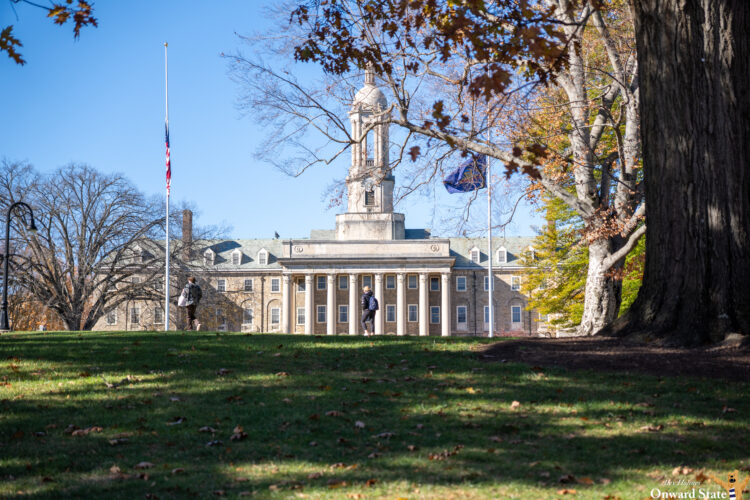
Pennsylvania Governor Josh Shapiro proposed allocating $30 million toward a newly established performance-based funding model for the commonwealth’s state-related universities during his 2026-27 budget address on February 3.
If approved by the Pennsylvania General Assembly, the funding would be distributed among Penn State, Temple University, and the University of Pittsburgh through the State-Related University Performance Fund, which lawmakers created in late 2025. The proposed model ties additional funding to performance metrics focused on student success, affordability, and workforce development outcomes.
In addition to the proposed performance-based funding, Shapiro recommended maintaining Penn State’s general support appropriation at $242.1 million. That funding level would serve as the university’s baseline, with any increases tied to the performance-based pool.
Penn State President Neeli Bendapudi is scheduled to appear before the Pennsylvania House Appropriations Committee on March 11 to discuss the university’s funding request as legislators work toward finalizing the state budget by June 30.
“Following last year’s successful effort to bring performance-based funding to fruition, I am encouraged by Gov. Shapiro’s proposal,” Bendapudi said in a statement. “We are committed partners with the state in this new funding model, as it would link future funding increases to metrics that support student success, college access, and workforce readiness.”
University officials say the proposed funding structure could mark Penn State’s first funding increase since the 2019-20 fiscal year, when lawmakers approved a 2% increase.
Mike Stefan, Penn State’s vice president for government and community relations, said the proposal could strengthen long-term state investment in higher education.
“Performance-based funding provides a framework to link student outcomes with stable, long-term state investment,” Stefan said in a release. “The governor’s proposal moves us in the right direction, and we are hopeful it will lead to Penn State’s first funding increase in seven years.”
However, Shapiro’s proposal does not include an additional $49 million in general support funding Penn State requested for the 2026-27 fiscal year. University officials previously said that additional funding would help offset educational costs for Pennsylvania residents and allow Penn State to freeze undergraduate tuition for the 2027-28 academic year if approved.
Penn State has consistently observed a funding gap relative to other public institutions in Pennsylvania. According to university data, Penn State receives approximately $5,796 in state support per in-state undergraduate student, which ranks last among Pennsylvania public institutions. In comparison, the University of Pittsburgh and Temple University receive roughly $3,500 and $5,000 more per in-state student, respectively.
University leaders have also noted that Penn State currently receives less general support funding than it did in 2000, when the institution received $242.9 million from the state. Adjusted for inflation, university officials estimate current funding would exceed $450 million if support had kept pace over time.
Beyond general support funding, Shapiro’s proposal includes level funding for several additional Penn State initiatives. The Agricultural Research and Extension program, also known as the Land Scrip Fund, would receive $57.7 million. The Pennsylvania College of Technology, a Penn State affiliate focused on applied technical education, would receive $35.7 million. Funding for Penn State Health and the College of Medicine would also remain unchanged.
The governor’s proposal does not include $2.35 million in funding for the Invent Penn State initiative, which was funded in the 2025-26 state budget and has received state funding in three of the last four years.
The new performance-based funding model considers multiple metrics when determining each university’s allocation. These include enrollment of in-state students, support for Pell Grant recipients and community college transfer students, graduation rates, degree production in high-demand fields, year-over-year improvement, and affordability measures.
The Pennsylvania General Assembly will review Shapiro’s proposal in the coming months as part of ongoing budget negotiations.
Your ad blocker is on.
Please choose an option below.
Purchase a Subscription!
About the Author


Penn State Football Mauled By Michigan 21-18
Rocco Becht turned the ball over three times in Penn State’s fourth-straight Big Ten loss.

A Tale Of Two Halves: Penn State Football’s Run Defense Deflates Another Josiah Zayas Standout Game
Penn State gave up 174 rushing yards in the second half alone.

Penn State Football Quarterback Rocco Becht Coughs Up Three Turnovers In Second Half Against Michigan
The Wolverines scored all 21 points of their points following a Becht turnover.

Compiling State College Apartment Complexes Close To CATA Stops
Apartment searching can be stressful, so here’s some ideas to help the process.