
You’re Being Watched: Penn State’s Flock Camera Surveillance Program
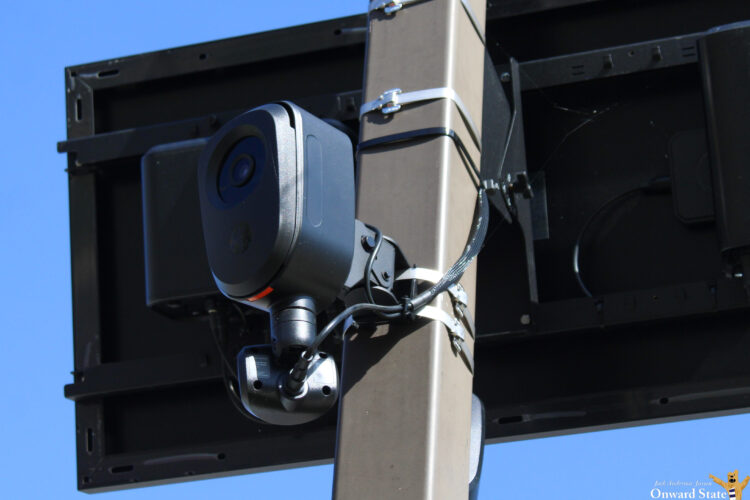
Most students walking across Penn State’s campus don’t notice the small black boxes mounted near intersections, roads, and parking lots. They blend into the background, another piece of campus infrastructure you assume has “just always been there.” But these aren’t just boxes; they’re the watchful eye of a growing network of automated license plate readers, or ALPRs, that quietly scan every passing vehicle, convert plate numbers into searchable data, and store the information for police use as part of a national, searchable database.
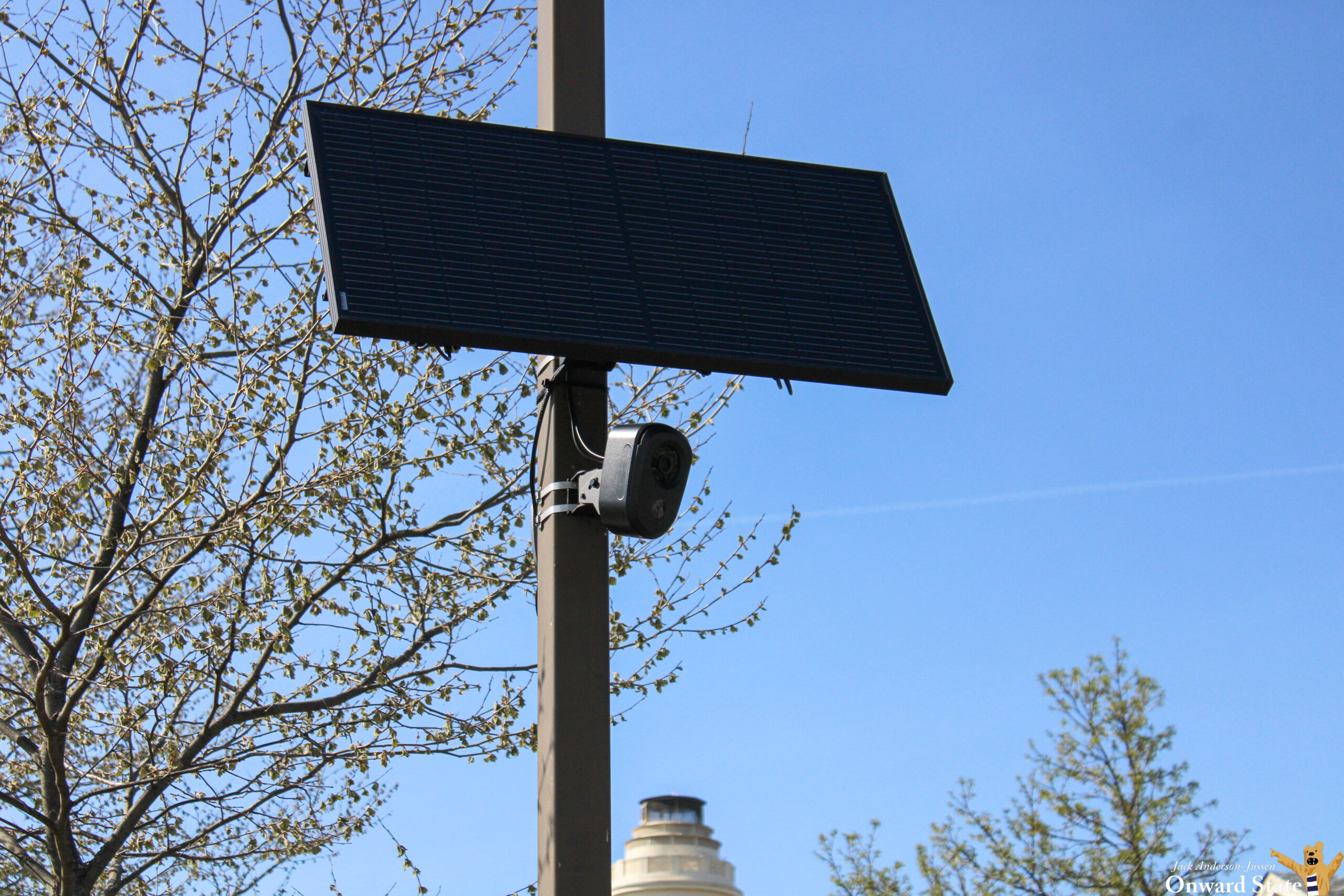
Penn State is in the middle of a pilot program using cameras from Flock Safety, a company whose devices have quickly spread across the country. The university describes the project as a limited test, authorized under internal policy and costing nothing during the trial period. Officials say the cameras are meant to help detect stolen vehicles, solve missing‑person cases, and conduct “general investigations.” They won’t say exactly where the cameras are, citing security concerns, and the data is reportedly kept for up to 30 days unless it becomes evidence.
The technology itself is simple in theory: a constantly rolling camera snaps a photo of a car, software reads the plate, and the system logs the time and location. But the implications are far broader. Flock Safety states they now work with more than 5,000 law enforcement agencies nationwide and 6,000 communities, creating a massive, interconnected map of vehicle movement across the United States. In many places, agencies share data across jurisdictions, meaning a scan in State College could theoretically be accessed by police hundreds of miles away. That very scale is part of what is worrying privacy advocates nationwide.
All of this begs the question: who can really access the system? That part isn’t totally clear. We know Penn State Police can use it, and we know local law enforcement can tap into the network when needed. But beyond that, the picture gets fuzzy. Flock’s system is built to be shareable across jurisdictions, which raises questions about how easily other agencies, including federal ones, could request or obtain access. The university hasn’t outlined what safeguards exist, what thresholds must be met, or whether outside agencies can pull Penn State data alongside local police. For now, students are left to assume the system is more connected than the university cares to publicly acknowledge.
Along these lines, students didn’t learn about the cameras through a university announcement. Instead, they found out through student journalists, independent researchers, and a website, PSUPrivacy.com, that began cataloging the devices and raising questions about how they operate. The site’s existence alone shows that students are uneasy with the idea of being monitored every time they drive onto, or even just past, campus.
Adrian Labell is a senior computer science student, and shares that he isn’t alone in his worries about these cameras. “Once you understand how much data these things collect and how easily it can be linked together, it’s hard not to be a little worried. I’m definitely not the only one who feels that way.”
Adrian also shared that his classmates feel similar concerns regarding the rapid and underreported implementation of these devices.
“People think it’s just license plates, but it’s way more than that. Once you start connecting every scan, you can basically map someone’s life. And I don’t like that.”
His concerns aren’t unique. Across the country, ALPR systems have sparked debates about surveillance, data retention, and who gets access to the information. The cameras don’t just capture plates; they also record vehicle make, model, color, and distinguishing features like bumper stickers or roof racks. Over time, and with minimal analysis, that data can reveal patterns: where someone lives, where they work, who they visit, and what routes they take. For students, that means late‑night drives home, weekend trips, and everyday routines become part of a searchable database that has the potential to be used against them in the name of justice.
Penn State Police say the cameras are already proving useful. A university police officer who asked to remain anonymous told Onward State that the system has been “critical” in solving several cases, including assaults, thefts, and other investigations.
The department’s public stance is straightforward: “The university may utilize surveillance cameras on university property for the purposes of deterring crime, assisting police in criminal investigations, and protecting the safety and property of the campus community.” And while the university hasn’t released any detailed reports tying specific cases to the cameras, the officer’s account matches how ALPRs are reportedly used elsewhere.
Even so, the security risks are hard to ignore. Cybersecurity professionals have repeatedly shown that networked surveillance devices like this are easily accessed and are vulnerable to hacking, especially when deployed at scale. Some YouTubers have even created guides to accessing the devices, reportedly in under 30 seconds.
ALPR systems are no exception to big tech data security risks. If a system like Flock’s were ever breached, the data could expose the personal routines, political affiliations, and social networks of millions of people. And because Penn State is not subject to the same public‑records requirements as municipal police departments, it’s harder for students to know exactly how the data is handled or who can request access once it’s been collected.
The local situation adds another layer. It’s no secret that security cameras are everywhere nowadays. State College Borough uses its own camera system, separate from Flock. The two systems don’t share data, and they operate under different policies. That means borough police and campus police aren’t pulling from the same pool of information, even though both systems track vehicles around town. For students and community members, it creates a bureaucratic patchwork of surveillance that’s easy to overlook and hard to fully understand.
All of this creates a larger conversation: what does this mean for Penn State students? The university and police argue that the cameras make our campus safer. Students and privacy advocates say the rollout lacks transparency and that the long‑term implications of normalizing surveillance on a college campus deserve more scrutiny. The truth sits somewhere in the middle. ALPRs have helped, and will continue to help solve crimes. They can also create a detailed record of people’s movements. Both things can be true at once, and both things deserve examination.
Penn State’s pilot program is part of a national shift toward a more automated, data‑driven style of policing. Whether the university expands the system, scales it back, or changes course will depend on how it intends to balance safety, privacy, and student trust. For now, the cameras will continue scanning and quietly logging the movement of thousands of people every day, most of whom have no idea they’re being watched.
Your ad blocker is on.
Please choose an option below.
Purchase a Subscription!
About the Author


Penn State BOT Finance Committee Recommends Sale Of Wilkes-Barre Campus For Golf Course
Some academic buildings will be left to Misericordia University.
AT&T To Upgrade Beaver Stadium Cell Service For 2027-28 Season
The upgrade’s goal is to make mobile service more reliable during football games and other events held at Beaver Stadium.

Penn State History Lesson: The Unsolved Murder Of Dana Bailey
Bailey was found dead in her apartment on Allen Street in 1987. Her case has still not been solved.

The Juice Is Worth The Squeeze: Jack Anderson-Jussen’s Senior Column
“If I’ve learned anything worth sharing, it’s this: be kind. Help when you can. Offer grace even when life isn’t offering it to you.”