
OS Debates: Is Mount Nittany A Mountain Or A Hill?

Folks, it’s time to settle the age-old question: is Mount Nittany a mountain or a hill?
The prime jewel of Happy Valley overlooks the Penn State campus and is one of the region’s most identifiable and iconic features. Cultural importance to the area aside — what is it really?
Two of our staffers have very different takes on Mount Nittany’s geologic classification to help push the discussion forward.
Collin Ward: It’s A Mountain
I am very passionate about the fact that Mount Nittany is indeed a mountain.
I know Oscar — with his smug West Coast attitude — is going to come in here talking about the Rocky Mountains this and the Rocky Mountains that. Well, here’s a little history lesson for you, Oscar.
The Rocky Mountains are estimated to be only 55 million to 80 million years old. The Appalachian range, which Mount Nittany is a part of, is 400 million years older than that.
For reference, the Appalachian range was created when North America collided with Africa as Pangaea came together. These mountains were already considered historic when the first dinosaurs appeared.
At their very peak, the Appalachian Mountains are thought to have reached elevations of 20,000 feet above sea level, comparable to today’s Himalayas.
While Mount Nittany has no doubt faced the indomitable strength of erosion since its creation, it’s a sign of Happy Valley’s strength that it still stands over 2,000 feet above sea level today.
Give it time, Oscar, and your favorite West Coast mountain will face the same fate.
On top of that, according to multiple sources, “a mountain is a landform that rises significantly above its surroundings.”
Does Mount Nittany not rise above the rest of Happy Valley? Does Mount Nittany not show up in every photo of the scenery around Beaver Stadium? When you climb to the top of Mount Nittany, can you not see all of Penn State and the surrounding area?
Look, Oscar, I am glad you have been so honored to live on the lesser coast of the United States of America. However, the East Coast doesn’t do flashy mountains.
We thrive on historical presences like Mount Nittany that just put its head down and get to work, like the countless generations of blue-collar workers who made central Pennsylvania what it is today.
Mount. Nittany. Is. A. Mountain.
Oscar Orellana: It’s A Hill
I’m a West Coast guy, as Collin mentioned. I grew up in the San Fernando Valley in Los Angeles with stunning mountain views literally surrounding me on all four sides. The San Gabriel, Santa Susana, Simi Hills, and Santa Monica Mountains have been a daily sight for me since I was born.
You would think I’d get used to reveling in their beauty every day, but the truth is, it never gets old. These gargantuan feats of nature are a symbol of my home, a symbol of the greatest city in the world, and symbols of the great state of California.
Here’s a picture from Penn State’s game at UCLA last year. As you can see, we have a clear view of the San Gabriel Mountains from within the Rose Bowl. The mountains dominate the surrounding area and make you think, “Wow, I’m really here right now.”
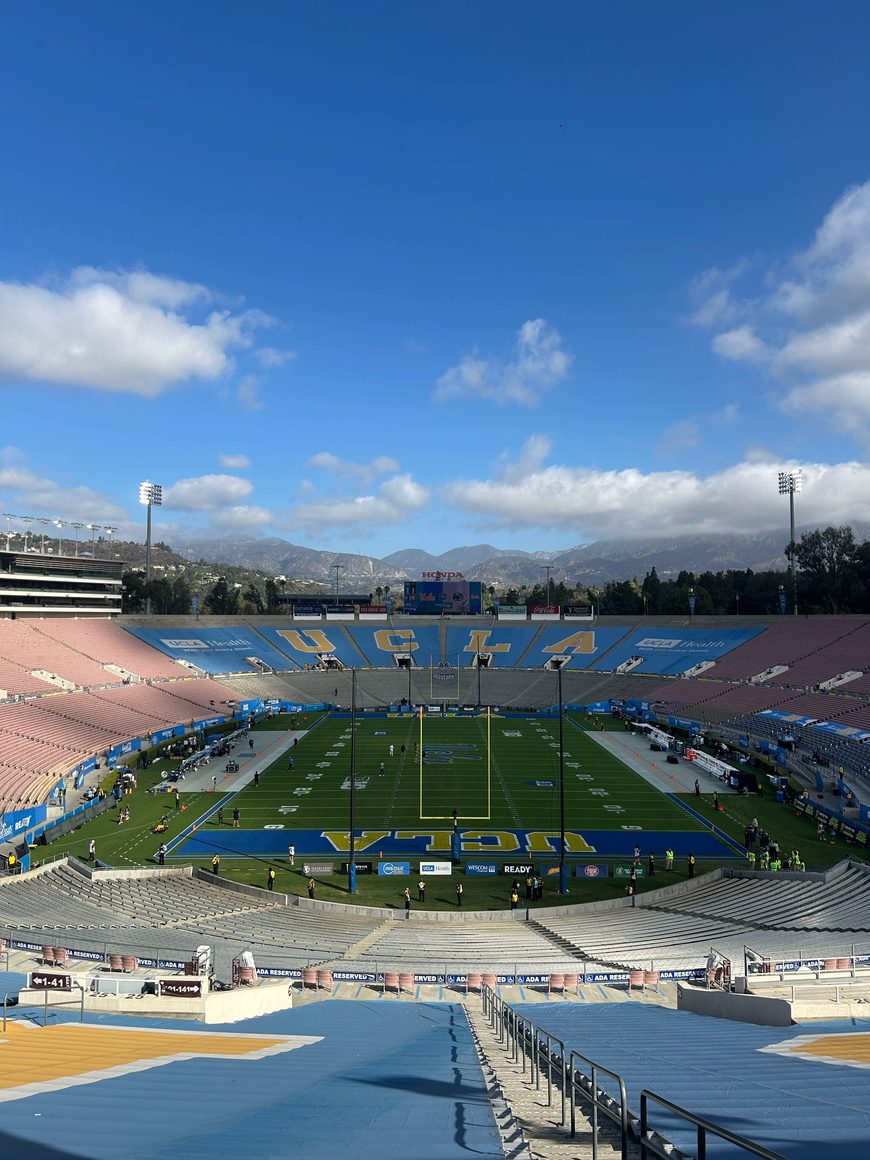
I also clearly remember Collin himself voicing a great appreciation for the beautiful mountain views in Pasadena. I attended every single Penn State home game with him last year. I didn’t hear him ever say anything about Mount Nittany from inside Beaver Stadium — mostly because you can’t even see it without being at the top of the stands.
I don’t need a whole geology/history lesson to prove my point here, folks. And I want to be as respectful as possible to central Pennsylvania. But Mount Nittany is not a mountain. It’s a hill.
It’s not tall; it easily blends into the rest of the surrounding mountain hill range, and its fame is innately tied to urban legends and folklore in the area.
I understand its significance to the region, and I can appreciate it as a Penn State student, but I just can’t call it a mountain.
Your ad blocker is on.
Please choose an option below.
Purchase a Subscription!
About the Author


Penn State Football Defensive End Yvan Kemajou Solidifying Role Through Consistency
“I’ve been getting more comfortable with the way Lynn wants us to play, attacking every practice, and trying to get better at my craft.”

Penn State Seeking Increased State Funding For 2027-2028
Penn State reported that it contributes approximately $15.8 billion to Pennsylvania’s economy annually.

Penn State Football Set To Encounter Familiar Face In Wisconsin Backfield
Wisconsin running back Abu Sama III spent the last three seasons with Iowa State.
Penn State Football Hot Takes Post-Buffalo
Is Koby Howard already Penn State’s best receiver of the last five years?