
A Look At Penn State Athletics & Football’s Financial Trends Since 2010
Where has Penn State Athletics’ money come from, and where has it gone?
Syracuse University’s Knight-Newhouse College Athletics Database provides financial data on FBS athletic programs, including a breakdown of total revenue and expenditures.
We compiled the data on Penn State Athletics’ finances from Fiscal Year 2010 to 2025. In that time, Penn State has seen great successes and failures, nationwide praise and nationwide scorn.
As Penn State’s success waxes and wanes and the global landscape of college athletics changes dramatically, its finances fluctuated with it. Here are some of the trends we noticed in Penn State Athletics’ fiscal data during the 16 years.
Amounts reflect CPI inflation-adjusted dollars.
Television Over Tickets
The most consistent trend over the last 16 years has been one thing: Football is king. Accounting for the most revenue and the most expenses, football remains the centerpiece of Penn State Athletics.
That said, the biggest change in Penn State Athletics’ revenue is a fundamental shift from in-person attendance to media rights and television distribution.
This is due to a variety of factors, most notably changes in postseason football and the media revenue boom that came with them.
With the introduction and expansion of the College Football Playoff (CFP), and with it the Big Ten’s growing share of broadcast revenue, Penn State’s distribution revenue has grown as well.
Thanks to the massive media contract between the Big Ten and ESPN, where the conference secures around 29% of the total media revenue generated by the CFP, Penn State’s revenue from conference and NCAA distributions, media rights, and postseason football has surged by 161.7% over the last 16 years, from $34.2 million in FY 2010 to $89.6 million in FY 2025.
A large chunk of the growth came between FY 2024 ($64.8 million) and FY 2025, reflecting two things: the CFP expanding from four to 12 teams and Penn State’s first appearance in the playoff.
In stark contrast, revenue from ticket sales has dropped 18.5% in the same period, from $61.8 million in FY 2010 to $50.4 million in FY 2025.
This represents a major shift in the Nittany Lions’ revenue mix, with gate ticket sales representing 39.2% of total revenue in FY 2010, while media rights accounted for only 21.7%.
In FY 2025, the figures flipped, with ticket sales plummeting to 19.8% of total revenue, while media rights surged to 35.1%.
With the College Football Playoff expanding to 24 teams beginning in the 2027 season and schools across college football struggling to fill their stadiums, expect these figures to become even more polarized.
The NIL Arms Race
Another major shift in college athletics that this data captures is the friction point where the traditional world of college sports collided with the modern world of college sports in the NIL era.
Penn State’s financials reflect how a top-tier program can generate incredible amounts of revenue while still being squeezed to the thinnest margins by buying a roster and covering all the other expenses that come with a major college athletic program.
In FY 2025, Penn State pulled in a record $254.9 million in revenue. However, total expenditures reached $254.6 million, spearheaded by an $18.4 million expenditure on institutional NIL revenue share, the first payment of its kind for the program and college sports as a whole.
This left Penn State with a surplus of only about $224,000 last year, leaving the program at virtually even. It’s important to note that college athletic programs do not actively try to make large sums of money. There are no stakeholders or owners to please financially.
Penn State is in the business of winning.
Regardless, this $18.4 million expenditure has become a massive, non-negotiable item, near the cap a school is allowed to spend yearly on revenue sharing.
If Penn State chooses not to spend up to the cap, it risks a catastrophic disadvantage in recruiting when competing with programs of the same caliber, a factor it already struggles with as is.
The expenditure puts pressure on every level of the program. Coaches and general managers must now manage teams as they would in a professional organization, with payrolls and an internal “salary cap” to contend with.
Penn State’s athletic department must also follow strict guidelines to comply with Title IX.
Penn State’s margins also have to compete with the $700 million, debt-financed major renovations happening to Beaver Stadium. Any dip in donor enthusiasm or a further, long-term decline in football performance can drastically increase the $534.7 million in debt the department already has.
This figure increased by 227.8% from FY 2024’s debt of $163.1 million and is the largest collegiate athletics debt in the country.
In the modern world of college athletics, even a financial heavyweight like Penn State can have little room for error.
Coaching & Staff Compensation
Coaches’ compensation surged to $48.6 million in FY 2025, up from $17.2 million in FY 2010, a 183.1% increase.
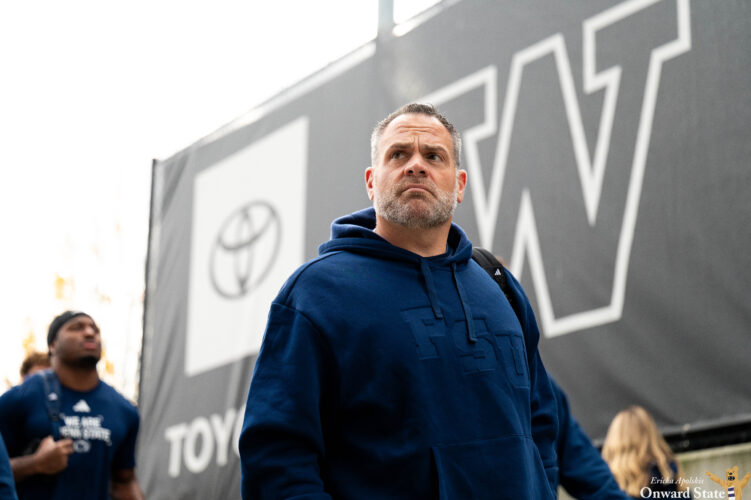
The growth tells the story of Penn State’s turbulent coaching history during that period, from Joe Paterno’s exit to where the program is today with Matt Campbell at the helm.
In FY 2010, when Paterno was still head coach, the coaching payroll was relatively modest. However, because of the hardship of the sanctions that followed the Sandusky scandal and Paterno’s exit, the program was quickly forced to recover.
When Penn State hired Bill O’Brien, it had to compete, for the first time, in the hyper-competitive modern landscape of college football coaching hires. To get a quality coach in the Big Ten, Penn State was forced to open its pocketbook.
This is reflected in the increase from $17.2 million in FY 2010 to $32.2 million in FY 2015.
During James Franklin’s tenure from 2014 to 2025, the coaching arms race escalated. Not only did coaching compensation rise, but so did non-coaching athletics staff compensation (reaching $41.1 million in FY 2025).
Modern programs are full of specialized assistants, analysts, strength coaches, nutritionists, coordinators, and other specialists. Franklin’s long tenure and large contract pushed Penn State’s personnel spending higher and higher, and further shredded its profit margin.
When Campbell took over earlier this year, not only were all previous changes in the financial ecosystem still present, but Penn State also now competes with the increased debt and roster payroll it has faced in the NIL era.
Your ad blocker is on.
Please choose an option below.
Purchase a Subscription!
About the Author


‘I Wrestle In The Way I’d Want To Watch’: Penn State Wrestling’s Mitchell Mesenbrink Adjusting To Life At New Weight
The reigning Hodge Trophy winner has emerged reenergized at 174 pounds after a quiet offseason
Penn State Football Seniors Shine Light On Young Players As They Prepare To Pass The Torch
Even when facing the culmination of their collegiate careers, the Nittany Lion’s top leaders showed love to the guys behind them.

Penn State Football Running Back Carson Hansen Questionable Against Rutgers
Matt Campbell said Hansen has been “super limited” in practice.



Penn State Women’s Hockey Searching For Reset After Splitting Mercyhurst Series
The Nittany Lions’ eight-game winning streak was snapped against Mercyhurst.