
Penn State History Lesson: Beaver Stadium
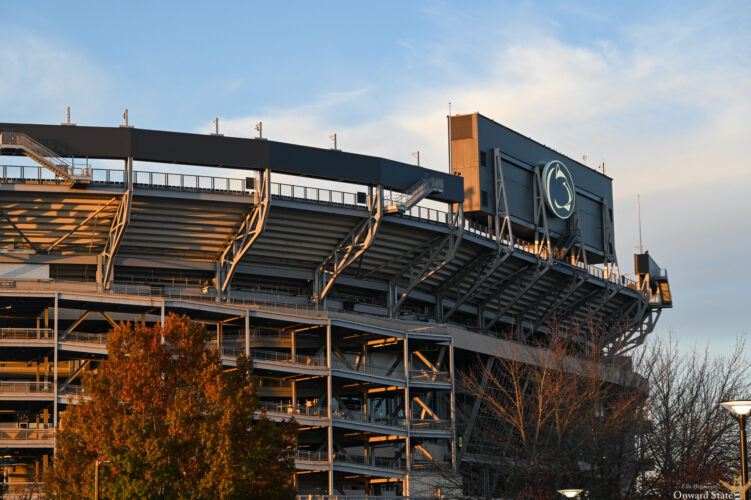
When folks think about Penn State, one of the first things that comes to mind is the grand cathedral that hosts the university’s football team: Beaver Stadium.
The Nittany Lion’s home is special after all. Ongoing renovations reportedly made Beaver Stadium the largest by capacity in the United States, surpassing Michigan Stadium.
The 2026 White Out game was the perfect celebration of this achievement, breaking the stadium’s attendance record when 114,419 fans piled in. The game also marked the third-highest-attended collegiate football game ever.
However, the stadium has had a long road to achieving such a prestigious ranking. Beaver Stadium wasn’t built overnight.
Penn State’s first officially designated area for football was Beaver Field, located between present-day Osmond Laboratory and the Frear Building. Before that, games were played on Old Main Lawn.
The field was named in honor of James A. Beaver, who enlisted in the Union Army during the Civil War and eventually rose to the rank of brigadier general.
Beaver served in numerous positions, including as a superior court judge, governor of Pennsylvania, and president of Penn State’s Board of Trustees. He passed away in 1914.
The first game Beaver Field hosted was against Western University of Pittsburgh (later Pitt) on November 6, 1883. With 500 fans in attendance, Penn State won 32-0.
By 1909, Penn State moved Beaver Field to where the Kern Building and Nittany Parking Deck stand today, upgrading the capacity to 30,000 seats. The field was originally built with wood, but was switched to steel in 1936.
The field also hosted other sports, including baseball, soccer, lacrosse, and track. Penn State beat Grove City 31-0 in the new facility’s first football game.
The field was later dismantled in 1959 and moved a mile toward the east side of campus, becoming the site of the Beaver Stadium fans love today. When completed, the stadium held 42,284 fans.
The first game was a 20-0 win for the Nittany Lions over Boston University on September 17, 1960. Halfback Eddie Caye scored the stadium’s first touchdown during the first quarter.
While the stadium has not moved since, it has undergone numerous renovations to gradually enlarge it to what it is today.
In 1978, Penn State expanded the stadium for the first time, adding more than 16,000 seats. The university cut the stadium into sections, raised them 8 feet with hydraulic jacks, and inserted concrete seating within the inner circle where a running track had previously been located.
It was not until 1984 that stadium lights were added. Shortly after, in 1991, an upper deck was added to the north end zone. Ten years later, a south end zone upper deck and 60 skyboxes were also added.
More recently, Penn State began a renovation project expected to finish before the 2027 football season. In January 2025, construction began with the demolition of the west press box, followed by the upper west seating sections.
The renovations accelerated in early 2026 with the addition of a new upper bowl area, a new north video board, and modern stadium lighting.
In total, more than 750,000 labor hours have been spent on completing Beaver Stadium.
While the renovations will certainly improve the gameday experience, the project is also expected to winterize the stadium and allow year-round events beyond football.
Earlier this year, Beaver Stadium hosted its first-ever outdoor hockey game on January 30. The Penn State women’s ice hockey game ended with a 3-0 Penn State win over Robert Morris.
Just a day later, the men’s team lost in a heartbreaking overtime game to Michigan State, 5-4. Regardless of the result, the event was a marquee game on the hockey calendar and drew over 74,000 people.
Beaver Stadium has also hosted two concerts in the past 10 years and will be able to host more after the renovation project is complete.
The Happy Valley Jam was held on July 8, 2017, marking the stadium’s first-ever concert. Country music artist Blake Shelton headlined the event. Other performers included Chris Young, Big & Rich, David Ray, and Adley Stump.
Then on April 27, 2024, country musician Luke Combs brought his “Growin’ Up and Gettin’ Old Tour” to Beaver Stadium with special guests Jordan Davis, Mitchell Tenpenny, Drew Parker, and Colby Acuff.
Over the years, both Beaver Field and Beaver Stadium have become the heart of Happy Valley, creating memories for students and the community to last a lifetime. Here’s to more of those memories in the future.
Your ad blocker is on.
Please choose an option below.
Purchase a Subscription!
About the Author
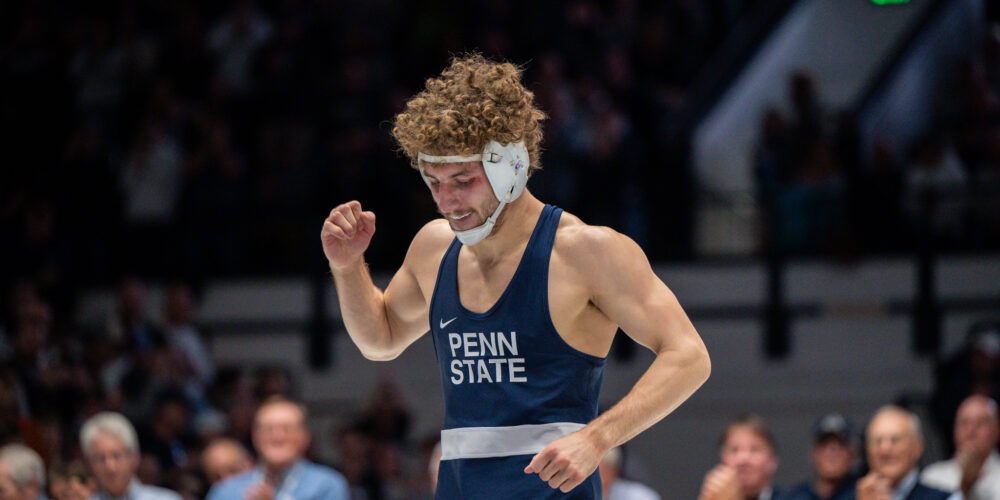
‘I Wrestle In The Way I’d Want To Watch’: Penn State Wrestling’s Mitchell Mesenbrink Adjusting To Life At New Weight
The reigning Hodge Trophy winner has emerged reenergized at 174 pounds after a quiet offseason
A Look At Penn State Athletics & Football’s Financial Trends Since 2010
Where has Penn State Athletics’ money come from, and where has it gone?
Penn State Football Seniors Shine Light On Young Players As They Prepare To Pass The Torch
Even when facing the culmination of their collegiate careers, the Nittany Lion’s top leaders showed love to the guys behind them.

UPUA Passes Bill To Support Diwali 2026 Celebration
UPUA met on Wednesday for a special presentation and to pass one bill.