
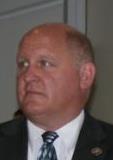
US Representative Glenn Thompson, or "GT" as I'm sure nobody but himself refers to him as, has been wildly outspoken against the American Recovery and Reinvestment Act since he voted 'nay' on that bitch.
"It really has failed," he said of the ARRA. But wait, GT is using the money despite its failure! Thompson has been using the so called 'failed' stimulus dough for a number of pet projects, including $1 million in funding for an airport access road in Lycoming County and $525,000 in a grant to the Cameron County Health Care Center. Rumors also speculate that he's using the money for a chin reduction, hair implants, and a conscience.
In his defense, he did say that if a bill passes to law, he will seize every opportunity to make sure the people he represents get their portion of the money awarded to them. The money he originally didn't want to see leave the legislative drawing board, that is.
Curious as to what stimulus money has been spent in Centre County, and where? Read on to find out.

Marlowe Froke, a retired PSU journalism professor, died this past Tuesday, February 23 at Mount Nittany Medical Center. He is survived by his wife, Marliene, and their two daughters, Paula and Dana.
Having grown up in the small, rural town of Vienna, South Dakota, Froke always saw the important role television could play in educating the masses, and he worked hard to accomplish this throughout his entire career, especially during his time here at Penn State. “His vision was instrumental in the early development of cable television, and in how cable television developed locally, regionally and nationally,” said Telecommunications Professor Patrick Parsons.
In 1959 he joined the PSU staff as an associate professor of journalism and developed the school's first broadcast journalism curriculum. After being named Penn State’s director of broadcasting, he created WPSX (you might know it as WPSU) and took the lead in the early days of cable and public TV to establish networks of connections among Pennsylvania stations and cable operations that preceded today's Public Broadcasting System.
Find out more about Froke's life and accomplishments after the jump.
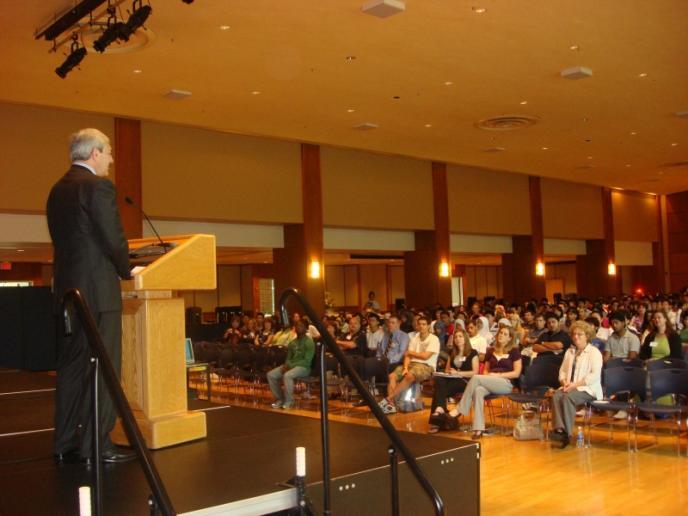
I found out yesterday that my little sister has decided to accept Penn State's offer of admission. While she is keen to strike her own path (in other words, an Onward State writer she probably won't be), I want to give her as much wisdom as possible before she gets here.
So, today, for all the little brothers and little sisters and future Penn Staters of the world, I want to know,
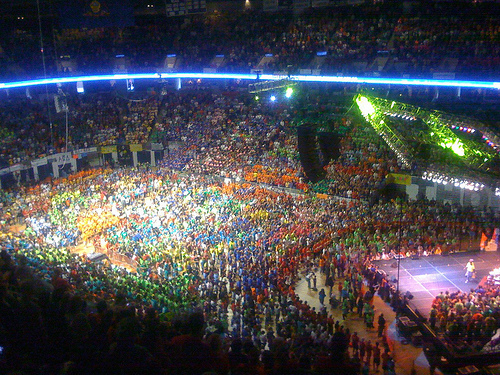
At this point last week, many of us were recovering from sleep deprived delirium, as THON had just ended. After having a week to cool down from the hype and hysteria of THON weekend, I started to wonder about what was in store for THON in the future.
Consider this year's total: $7,838,054.36, roughly a 4.6% increase from last year. Given a recession and a rather botched canning weekend (stupid snow), this was a major achievement and represented a ton of hard work. However, it got me thinking. What will happen when THON reaches a "steady state" for the amount of money it raises every year? I don't think this will happen soon, as there is still plenty of room for THON to grow within PSU. But, what happens when (if?) THON reaches a point of zero growth? Read the full post for my thoughts.
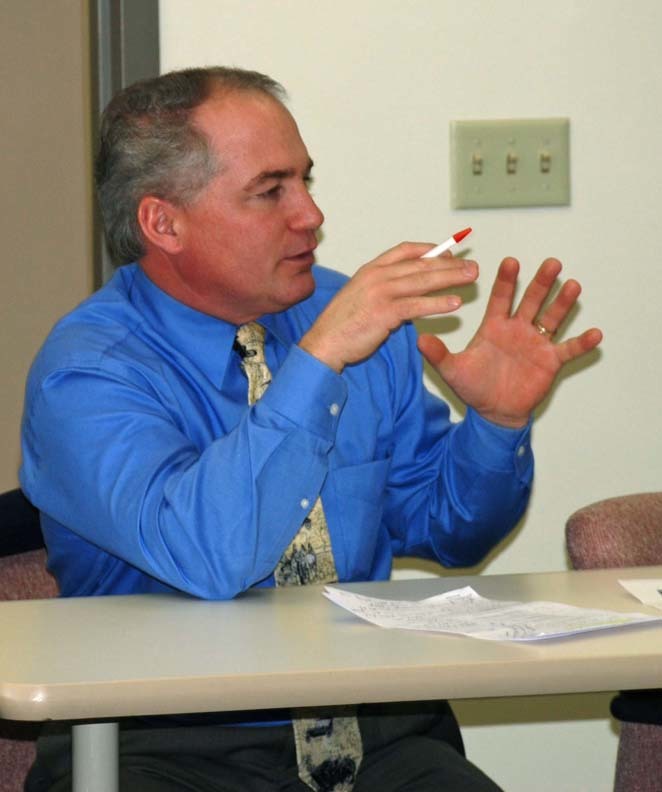
Pennsylvania Rep. Kerry Benninghoff is coming Wednesday to drink some coffee at the Abba Java Coffeehouse here in town. He will be here between 9:30 and 11:00 am to hold mobile office hours and, I don't know, work on his novel in public.
If you want to come see Benny and the Jets, you have to make a phone call and schedule an appointment in advance. The phone number is (814) 355-1300.
Also, it sounds like if you just want some coffee at Abba Java, you'll probably need to call that number in advance as well. So if you frequent that particular coffee house, I'd get on my phone.
No word yet on the cookie.

 Movie Times
 Find an Apartment
 Find New/Used Vehicles
Collegian Opens Floodgates, Allows Comments
Sunday was an auspicious day for the Daily Collegian. It marked the first time that readers were able to comment on articles (as distinct from blog posts). The system works by utilizing a comment system called Disqus and requires users to authenticate with either a Twitter, Facebook, Yahoo!, OpenID, or Disqus account.
Editor-in-Chief Rossilynne Skena stated on her official blog that the authentication system is in place "to avoid the spam and hostility so often associated with anonymous comments."
We want to congratulate the Daily Collegian on taking its next big step in the scary world of online media. I am surprised that it took them this long, though I suspect it had something to do with credibility worries. Good luck with keeping the commenters civil!