
‘Everyone Thought The Season Was Going To Go Different’: An Autopsy On Penn State Baseball’s Disappointing 2026 Season
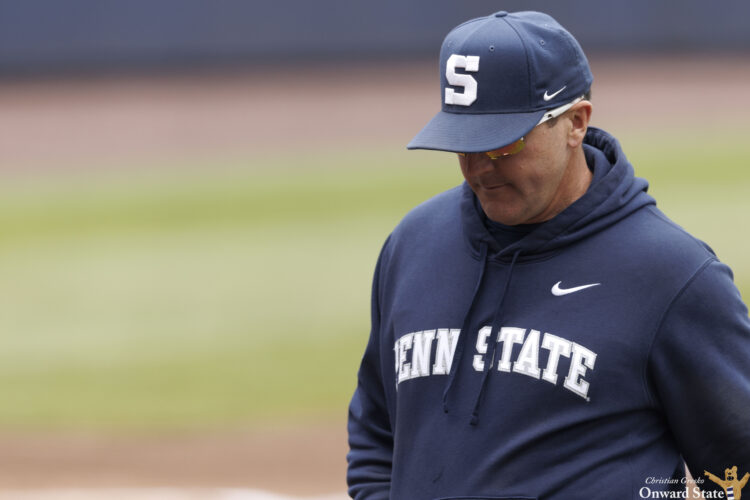
Expectations are a two-way street.
On the one hand, you can’t obtain them without truly making progress in roster construction or prior results. No team sets expectations without reason to back them up, so for a team to have a certain level of them, they must be doing something right.
But they’re also a curse, especially for teams and programs like Penn State baseball.
For 25 years, there were no expectations. Since the team’s last trip to the NCAA Tournament in 2000, they’ve finished below .500 in conference play on 14 different occasions. They had missed the Big Ten Tournament 13 times. The best season that they had in 23 years was going 31-26 in 2007 and finishing third in the conference. They were a pushover in a conference that, for the last several decades, hasn’t been formidable in college baseball.
But things changed when Vice President of Intercollegiate Athletics Pat Kraft tabbed Boston College manager Mike Gambino as Penn State’s new skipper in 2023 after Rob Cooper stepped down. There was more investment in the facilities, more promotions to draw fans, and the team was winning.
In 2024, they finished with a winning record and went .500 in Big Ten play, both for the first time since 2016. As the No. 7 seed in the Big Ten Tournament, they went on a miracle run to the Big Ten Championship game, falling short of an automatic bid to the NCAA Tournament by just one run against a Nebraska team that was effectively playing a home game in Omaha.
In 2025, a tremendous transfer portal class led by ace Ryan DeSanto, outfielder Paxton Kling, and infielder Ryan Weingartner led the Nittany Lions to 33 wins, the second-most in program history, and another trip to the Big Ten Tournament semifinal before losing to Nebraska again in similar circumstances. That summer, they tied the program record with five players drafted in the 2025 MLB Draft.
Momentum was going in the right direction. They broke a program record with over 6,000 fans in a late-season upset win over No. 15 West Virginia. They announced a landmark signing of Japanese prospect Genei Sato, who will join the team in 2027. They signed highly-touted high school prospects and kept in-state talent home. Popular baseball content creators were visiting the campus. They got their own student section, as Section 814 was launched in March.
As the 2026 season opened, they were considered a consensus top-eight team in the Big Ten and were even on Baseball America’s way-too-early NCAA Tournament bubble as an at-large. For the first time in 25 years, there was an expectation that Penn State baseball would be a formidable group and a real chance to shatter the glass ceiling that a Northeast college baseball team naturally has.
And then, it just didn’t happen.
Stunningly, Penn State went just 16-35 for its worst record in eight years. They lost 21 conference games, tied for the most in program history. They missed the expanded Big Ten Tournament, finishing tied for 14th in a 17-team conference. They had just one winning weekend all season long.
“I really think everyone thought that this season was going to go differently,” senior outfielder Jesse Jaconski said in early May. “Baseball happens. Some days, you don’t think it’s your day or your year, but you just keep grinding it out and trusting the process every day.”
So the question becomes, what happened? Did everyone get too carried away with the expectations? Was this caused by any extenuating circumstances? Is the momentum that the program had found now washed away, or was this just an aberration?
Now that the season has come to a close, it’s time for an autopsy on what went wrong for Penn State baseball in 2026.
The Schedule
It was no secret that Penn State wanted to be challenged this season. In constructing their non-conference schedule, Coach Gambino sought out Power Four opponents and special venues to boost the team’s RPI, one of the most important metrics in determining who makes the NCAA Tournament.
“This is the first schedule that really gives us a chance, as far as RPI top to bottom, to get in [as an at-large team],” Gambino said back in March. “Which is something I’ve been pushing really hard for.”
That schedule included top-100 opponents in West Virginia (No. 18), Pittsburgh (No. 41), and Kansas State (No. 56), all away from Medlar Field at Lubrano Park. The Nittany Lions even planned to host UCF (No. 33) and another game against the Mountaineers, but both were rained out. Additionally, they played a three-game road series against Texas Tech, which had a down year, and faced Air Force at the season-opening MLB Desert Invitational in Arizona back in February.
When you add in a stronger Big Ten that could send up to six teams to the NCAA Tournament, the team’s strength of schedule skyrocketed across the board:
2024: No. 120 SOS, No. 223 NC SOS
2025: No. 102 SOS, No. 240 NC SOS
2026: No. 63 SOS, No. 115 NC SOS
(Source: WarrenNolan.com)
And while the team played considerably worse against teams across the RPI ladder than they did in the last two seasons, they played fewer games against Quad Four opponents, regional teams usually scheduled for midweek games.
2024: 17 games (10-7)
2025: 20 games (12-8)
2026: 14 games (8-6)
The schedule isn’t an excuse for the team’s performance, but the tougher circumstances contributed to the rough overall record.
The Pitching
For several years now, Penn State baseball’s strength has been its offense, but it’s gotten by without a strong pitching staff thanks to strong individual performances.
What isn’t tenable is your offense consistently being put behind the eight-ball and having to chase big deficits early. For Penn State, it was a jarring regression on the mound:
2024: 6.64 ERA, 1.70 WHIP, 5.2 BB/9
2025: 5.99 ERA, 1.65 WHIP, 5.0 BB/9
2026: 7.45 ERA, 1.85 WHIP, 5.5 BB/9
It’s the worst single-season team ERA in at least a quarter century. Despite having an average offense by Big Ten standards, they were last in team ERA and WHIP, No. 16 in walk rate, and No. 16 in runs allowed per game (7.8). The only comparable team in pitching futility was Maryland, which beat the Nittany Lions in the final series of the regular season last weekend.
They allowed 10 or more runs 15 different times. They lost seven times via run rule. They had a run differential of -118.
So what happened? Well, it’s a combination of factors.
The blueprint of acquiring a hard-throwing starting pitcher from a mid-major conference worked when they brought in DeSanto in 2025 from St. Joseph’s, but it was a significantly tougher road for Maine transfer Colin Fitzgerald, who pitched to a 6.51 ERA in 56.2 innings across 13 starts. Fitzgerald led the team in strikeouts with 67 by coupling a low-to-mid 90s fastball with a widely-panned curveball, but allowed a lot of hard contact and surrendered nearly two baserunners per inning.
The one thing this team did significantly better in 2026 than in 2025 was that their top three starters were able to go every weekend, as they combined to miss just one weekend start all season. Still, you had guys like Ben Hudson go from five strong innings to a 10-run blowup start from one week to the next, while hard-throwing freshman Isaiah Shayter had to endure growing pains as he transitioned to the college game.
The real regression came in the bullpen, where top returning arms missed time or underperformed. In 2025, Penn State had five relievers throw at least 20 innings and post an ERA under five. They had zero in 2026, with Harrison Lollin being the only pitcher, regardless of sample size, to pitch to that mark in only 13 innings.
Ben DeMell continued to be a rock for the team, and transfer Kyle Emmons did a serviceable job replacing the impact of guys like Anthony Steele and Chase Renner, but both struggled at times. Matthew VanOstenbridge was limited to 10 ineffective innings, Dimond Loosli didn’t play much in the first half, and walked 22 batters in 20.2 innings, and veteran arms like Skip Shenosky, Logan Olson, and Matt Morash combined to pitch just 7.1 innings all season long.
It wasn’t clear whether the absences of some pitchers expected to be big parts of the bullpen were due to injuries, but it would be a logical explanation that would combine with another big reason this season didn’t go the way they wanted.
The Injuries
Because of the way college bullpens operate and the private manner in which many pitching injuries occur, we don’t know for sure how much the pitching staff’s ineffectiveness was due to injuries keeping valuable arms on the shelf for extended stretches, but the team definitely did not get consistent health from their hitting core.
It started just a few innings into the season, when starting catcher Nate Voss suffered a season-ending injury in the season opener against Air Force on February 13 that required surgery. After his strong junior year in 2025 delivered valuable lineup depth, the team suddenly had to pull the redshirt of true freshman Avery Smith to platoon with senior defensive specialist Joey DeMucci.
Throughout the first few weeks of the season, guys would go in and out of the lineup due to illness and injury. Kevin Karstetter, a State College native who transferred to Penn State for his final collegiate season, missed much of March after suffering a concussion, needing some time to get back into game shape.
Toward the end of the season, the bench was stretched extremely thin with injuries to Cohl Mercado and Jack Porter. Mercado, the team’s starting center fielder and usual leadoff hitter, was banged up the entire second half of the season before missing the final month. Porter suffered an injury in late April against Oregon and was limited to just two at-bats in the final three weeks.
These two injuries, which took out two of the best on-base threats in the lineup, massively weakened a lineup that struggled during the team’s unsuccessful push to sneak into the Big Ten Tournament. The Nittany Lions were down to 11 available position players most days, destroying any and all defensive flexibility and limiting their options to pinch-run and hit late in games.
The Inconsistency
Despite the pitching staff frequently burying the offense early in games, there were a handful of conference games in which the pitching held serve against formidable offenses, only for the Nittany Lions’ bats to go cold.
A team can have a solid win-loss record and a bad run differential. Those teams are the ones that manage to match good hitting and good pitching together at the same time, winning close games. Penn State was not one of those teams, going a miserable 5-10 in one-run games and 7-15 in games decided by two runs or fewer.
The only true consistency they got all season was in the brilliance of Michael Anderson, as the Arkansas transfer finished his collegiate career in style by becoming Penn State’s first-ever 20-home run hitter in the midst of one of the greatest individual seasons in program history. Bryce Molinaro overcame a slow start to potentially finish off an all-time great Penn State career with another strong season, but outside of these two, it was a lot of up and down.
Jayden Davis was a perfect leadoff hitter all season long, as the Vanderbilt transfer posted a .410 OBP. Yet, he had a propensity to pound the ball into the ground at inopportune times, leading the nation with 11 double plays grounded into. West Virginia transfer Spencer Barnett both started and ended the season strong, but scuffled in the middle of the lineup during the dog days of late March and April. Jesse Jaconski, one of the team’s top returning bats, struggled mightily for most of the season until finishing strong in early May.
The injuries made the lineup shallower. The power threats were condensed to Anderson, Molinaro, and Barnett. Maddox McDonald performed admirably down the stretch after injuries forced him into the lineup, but he was usually used to drop down a safety squeeze or any other sacrifice bunt to get a runner over. Preston Yaucher’s bat lagged behind his terrific glove at shortstop.
A big difference between the 2025 and 2026 versions of the offense was baserunning. While the 2025 team broke program records and led the Big Ten with 108 stolen bases, the team managed just 40 this season. A big reason behind that? The team’s constant early deficits neutralized the run game.
“We want to be aggressive, we want to run the bases every single time,” Gambino said about the big decrease in early April. “It’s just harder to do that when they’re chasing four [runs].”
At times, the team mimicked that SpongeBob construction bit, where the moment you make progress in one area, something collapses behind you. There was no greater demonstration of that than the final four weeks of the regular season.
With Penn State desperately needing to win multiple series to get into the Big Ten Tournament, its maligned pitching staff stepped up. In the final 12 conference games, they allowed five runs or fewer 10 times. They went just 4-8.
Why? By that point, injuries to Mercado and Porter forced them to essentially start the same starting lineup every game, with the exception of the catching platoon. They lost two one-run games to a ranked Oregon team on the road and had the tying runs on base twice against Minnesota, but weren’t able to deploy pinch-running or pinch-hitting opportunities due to only running with a two-man bench. Justin Turcovski essentially served as the team’s sole pinch runner or hitter and could only do it for an outfielder.
The only other options Gambino had were pulling the redshirts of guys like Chase Roberts or Jimmy Gray late in the season, something that harms the player more than it helps the team. Hopefully, in the future, an NCAA five-in-five eligibility rule change keeps benches long enough for coaches to deploy at any time.
The Freshman Growing Pains
It is impossible for a freshman to come out of the gates and produce right away in college. Every good team has one or two unexpected freshmen emerge as key contributors right away, after all.
The problem Penn State had was that they needed more than one or two to step up in a major way, putting a lot of pressure on guys who were making a difficult jump from Northeast high school baseball to Power Four college baseball.
For much of the season, you would see two freshmen in the starting lineup for Penn State. Yaucher was the everyday shortstop, and while his glove was extremely mature for his age, the Wisconsin native’s bat was considerably behind. He found some extra thump towards the end of the year, which is important for him going forward.
Smith was a revelation behind the plate after having his redshirt pulled in February. He posted a .373 OBP and a .771 OPS in 41 games, and while his defense remains a work in progress, he seems like an exceptional bedrock for a catching room that’ll be starting over in 2027.
On the pitching side, they relied on Shayter to be their Sunday starter and had to live through some rough days. He’d rarely get shelled, but his ERA finished at 9.43 due to a .365 batting average against as hitters pummeled his stuff in the zone. Coach Gambino spoke fondly of the hard-throwing right-hander as he finished the season strong, but it’s hard to manage in the moment.
Elsewhere, they gave big innings to guys like Ethan Bauerschmidt and Robert Brown III in the bullpen, who both traded good outings and tough outings as freshmen.
With these five and a myriad of freshmen who either redshirted or played negligible time, Gambino emphasized that player development was of extreme importance in the midst of a season like this.
“We always talk about how obsessed we are with player development,” he said after a strong outing by Brown in late March. “That doesn’t stop in season, guys are continuously working to get better.”
The Future Outlook
That leaves us with the ultimate question: Is the baseball program still going in the right direction?
While it’s easy for faith to be shaken after such a startling regression, you can still see things going in a positive direction. Progress isn’t always linear, which can be difficult for sports fans to swallow.
Penn State has another top-50 high school recruiting class coming in, a ranking that does not even include Genei Sato, who will immediately become the biggest MLB prospect ever to put on the blue and white. They’ve established a blueprint for SEC upperclassmen transfers looking to rebuild their draft stock after the success of Anderson and Kling over the last two seasons. They’ve invested enough in the facilities and the program itself that you can trust that they’ll be active in the portal, looking for a class like 2025’s.
Coach Gambino believed this was his deepest team at the start of the season, and while various factors eroded that depth as the season progressed, he likely still believes he has enough to make 2026 an exception, rather than the expectation.
And speaking of those expectations, they’re ultimately a net positive. Without them, you’re functionally irrelevant. For a program that expected sleepy springs in empty ballparks for 25 years, it’s a nice change that a season that used to be status quo is talked about as an unacceptable disappointment.
“I’m glad that we’re in the spot that, for 25 years, this is just how it was,” Gambino said. “And now, none of us are happy about where we are.”
Your ad blocker is on.
Please choose an option below.
Purchase a Subscription!
About the Author
Hundreds Gather Downtown For No Kings: Bank The Vote Demonstration
The event culminated with a march to the State College Municipal Building to encourage early mail-in voting before midterms.
Penn State Football Names Team Captains Against Michigan
Rocco Becht, Anthony Donkoh, Kooper Ebel, and Blaise Sokach-Minnick received the honor.
NWCA All-Star Classic To Be Held At Rec Hall On November 24
For the second time in three years, 20 of college wrestling’s best will be at Rec Hall for the All-Star Classic.