
Penn State Hoops Head Coach Mike Rhoades Counting On Experience To Combat Lack Of Resources
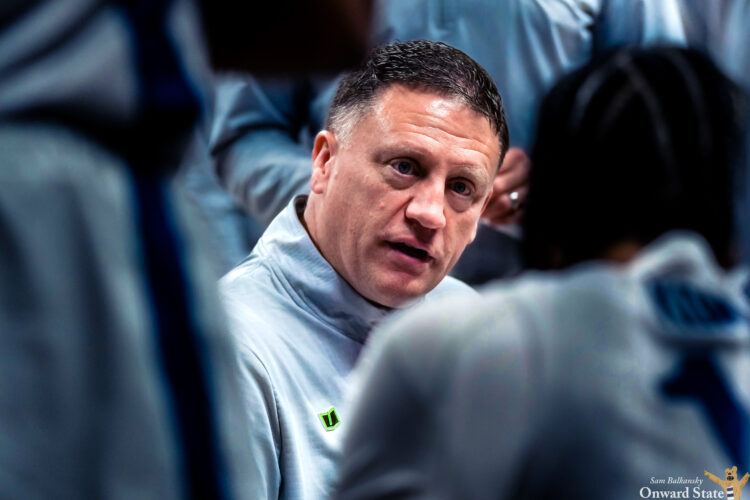
It’s no secret that Penn State men’s basketball isn’t exactly the 1996-98 Chicago Bulls of Big Ten men’s basketball. Folks can chalk that up to Happy Valley’s lack of basketball culture, an absence of premier talent, or the retention of lackluster coaching staffs through the years.
While Mike Rhoades is entering his fourth season at the helm to the dismay of many Penn State fans, it’s also fair to acknowledge that college basketball has changed radically.
Rhoades caught the front of the NIL era as soon as he set foot on campus, and that brings issues that he’s never had to deal with before. After all, Rhoades proved at VCU that he was worthy of a Big Ten head coaching gig.
Rhoades lost a lot of the Penn State faithful in 2025-26. The Nittany Lions crashed into a 12-20 overall record with a 3-17 mark in Big Ten play, their worst since going 2-16 in 2012-13. Even with the highest-rated recruit in program history in Kayden Mingo, Rhoades and the program couldn’t make it work.
But there’s still time to figure it out in the eyes of Pat Kraft, even if the fandom grows increasingly disillusioned. Rhoades just has to make the funds work.
Rhoades and the coaching staff opted for a change a season ago. They constructed the youngest roster in all of the Power Four conferences. Penn State had an average age of 18.8 years. The season clearly didn’t go the way Rhoades and the squad anticipated, which has led to a different approach heading into 2026-27.
“We sort of pivoted on some of the decisions. You’ve got to learn from some of the decisions you’ve made, and hopefully, even though we’re very limited in a lot of resources, we’re trying to get some older guys, guys with experience, and find a way to get them here,” Rhoades said in his summer media availability on Tuesday. “And I think we did a good job of that with what we have.”
However, Penn State’s failures can’t be chalked up to a lack of resources. Men’s basketball spent $15,001,847 in the 2024-25 fiscal year (FY25), which ranked seventh in the Big Ten behind Indiana, Michigan State, Illinois, UCLA, Rutgers, and Minnesota. Extra Points newsletter broke that down here.
It’s important to consider that those $15 million include travel expenses, facilities, and everything in between, not just NIL sharing and payments.
Penn State is the only Big Ten school to release the NIL figure, which sits at $3,004,666. Rhoades said it’s one of the lowest in the conference.
“No coach is ever going to say they have enough, right? Everybody wants more in this arms race, this and that. It is what it is,” Rhoades said. “You got whatever you’re given, you’ve got to try to do the best that you can with it and make no excuses and figure it out. The situation we’re in is what we’re in. … When your back’s up against the wall compared to what others are doing, no excuses. Got to figure it out.”
Penn State’s operating budget still sets it near the upper-middle portion of the Big Ten table. That could quickly change with schools making deeper runs in the tournament, though. Michigan is fresh off a national title and Illinois off a Final Four run.
“When the rich keep getting richer, you can stand there, and you just gotta figure it out, you know what I mean?” Rhoades said. “And that’s how it is. I’m going to continue to fight for our program as best we can in a respectful and classy way.
“For the resources and the program part, you just got to keep knocking on doors and keep talking to people and educating people on what it’s going to take. … the Big Ten is the richest conference in basketball and you see that with the teams being put together.”
Still, despite its expenditures, Penn State finished dead last in the Big Ten last season. The two schools ahead of the Nittany Lions in the final standings, Maryland and Oregon, spent $12,972,857 and $14,072,869, respectively. Both below the Nittany Lions’ total FY25 expenditures.
No matter what resources Penn State hoops does or doesn’t have, that doesn’t maintain the majority of Rhoades’ focus as the team gears up for another season full of new faces. Rhoades wants the newfound experience to be the driving factor of the team’s success in the Big Ten, not the amount of money that Penn State can flaunt at them.
The Nittany Lions added six transfers out of the portal, headlined by former Miami (Ohio) guard Brant Byers. The Pennsylvania native said Rhoades pitched the Penn State vision to him, focusing on his Pennsylvania roots as the driving force for his transfer.
Ivan Jurić, Penn State’s main returner from 2025-26, also said he chose to stay to develop and take the next step with Rhoades at the helm. Penn State changed its formula on its roster makeup, but will the program’s resources allow it to keep up with the rest of the Big Ten?
Your ad blocker is on.
Please choose an option below.
Purchase a Subscription!
About the Author

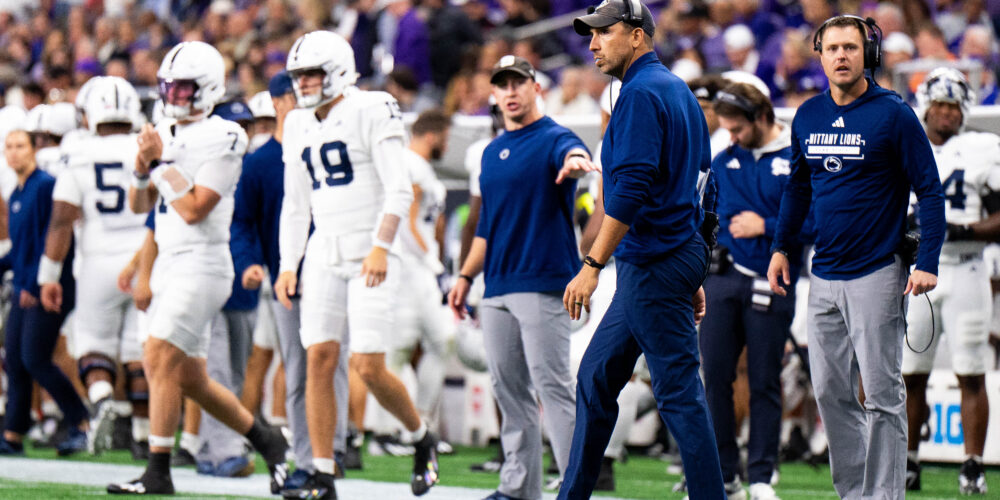
Penn State Football Falls To Northwestern 34-13
The Nittany Lions surrendered 413 yards on 54 carries.
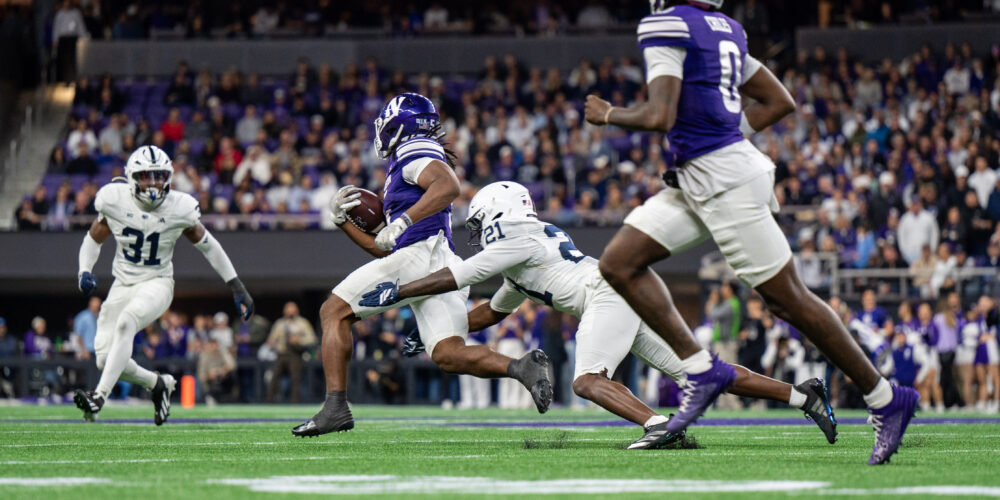
Penn State Football Left Without Answers After Northwestern Pummeling
The Nittany Lions allowed Northwestern to have its highest single-game rushing total since 2003.
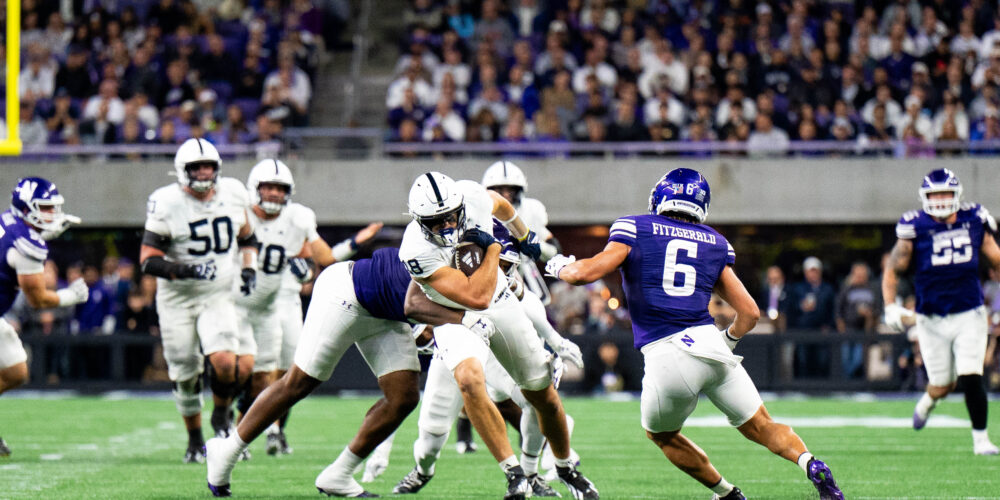
Penn State Football Voices Differing Opinions On Physicality In Preparation For Northwestern Matchup
“Don’t want injuries to happen, but I think we’re at a point where we just need to have that physicality in practice and change it up a little bit.”
Penn State Football Voices Differing Opinions On Physicality In Preparation For Northwestern Matchup
“Don’t want injuries to happen, but I think we’re at a point where we just need to have that physicality in practice and change it up a little bit.”