
Everything To Know About Alleged Penn State Drug Trafficking Ring As Hearings Approach
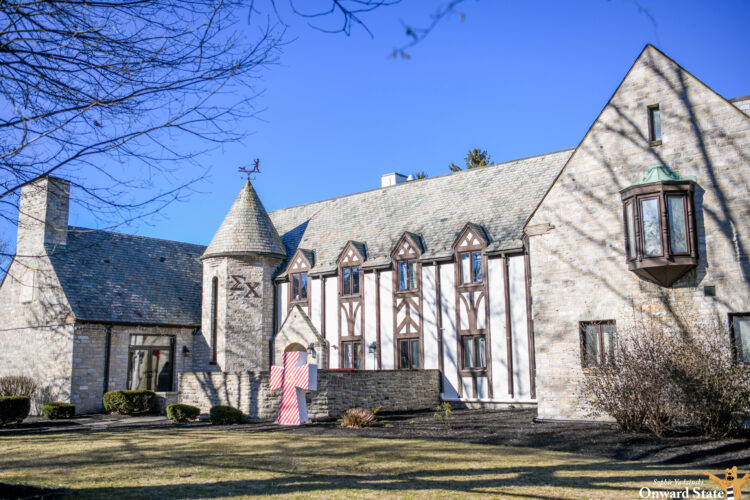
The alleged cocaine trafficking operation involving Penn State students and three off-campus fraternity houses has quickly become national news.
Fourteen people, including 13 current and former Penn State students, were charged on August 17 in connection with the drug trafficking ring and will face preliminary hearings in the coming days.
Since the details of the investigation have not been released to the public, there are still questions surrounding who was involved, what happened, and what comes next.
With many of the alleged members of the drug ring set to have their preliminary hearings on September 2, here’s everything you need to know.
How It Started
The alleged trafficking operation took place between 2023 and 2024. State College police Detective Donald Paul, however, began investigating the alleged operation in September 2024.
The grand jury presentment says Paul developed confidential informants early in the investigation. Those informants then made several controlled purchases of cocaine as police worked to gather evidence.
Police have not publicly identified a specific incident that prompted the investigation.
Robinson was arrested in December 2024 after an informant told police he was selling large quantities of cocaine for the Delta Upsilon fraternity house.
Robinson’s Arrest
According to police, Robinson initially believed the officers arresting him were fraternity members playing a prank. After his arrest, Robinson cooperated with investigators and identified Abbatiello as his source for cocaine.
Charges were not announced until August 2026, nearly two years after the investigation began.
Sunday said the lengthy timeline was necessary because investigators were working to uncover an “upper-level trafficking organization” in the region.
Alleged Leaders
According to a grand jury presentment, Agostino Abbatiello, 24, and Thomas Robinson, 23, allegedly served as the operation’s two primary cocaine suppliers.
Prosecutors allege the pair regularly traveled to Philadelphia and New York to purchase large quantities of cocaine before bringing it to State College.
According to the charges, Abbatiello received at least $123,500 in drug money. Both Abbatiello and Robinson face felony charges.
Three Penn State Fraternities Involved
The allegations have also put a spotlight on Delta Upsilon, Sigma Chi, and Acacia.
The cocaine was allegedly packaged at the Delta Upsilon and Sigma Chi fraternity houses before being distributed primarily to Penn State students.
Pennsylvania Attorney General Dave Sunday said evidence showed that some fraternity pledges were allegedly introduced to packaging cocaine as part of their initiation into the organizations.
While most of the attention has gone to Delta Upsilon and Sigma Chi, according to the grand jury presentment, Kaden Howe, a member of Acacia at Penn State, bought cocaine from Mohammed Huraibi multiple times for personal use and to sell at Howe’s fraternity.
Known Consequences
Penn State placed Delta Upsilon on interim suspension while the university investigates the allegations.
Sigma Chi is not currently recognized by Penn State and operates independently of the university. The fraternity was previously one of the founding members of the State College Interfraternity Council.
Sunday did not directly say whether hazing charges related to the packaging of cocaine could be filed when asked about the issue during the August 17 press conference. He said State College police are continuing to investigate.
Six of the 14 defendants are facing felony charges, including Huraibi and Lars Zeepvat, who were identified as alleged dealers alongside Abbatiello and Robinson.
Abbatiello, Robinson, Zeepvat, and Huraibi are being charged with felony corrupt organizations, conspiracy, and dealing in proceeds of unlawful activity.
Robert Zanolla is being charged with felony counts of conspiracy and criminal use of a communication facility.
Paul Robinson, Thomas Robinson’s father, is being charged with felony tampering, hindering apprehension, taking steps to conceal evidence, and obstructing the investigation.
Eight other current and former Penn State students are facing misdemeanor counts of drug possession and paraphernalia, including Liam Smith, Michael Brogno, Howe, Seth Beardsley, Kyle Ridpath, Connor Hurleigh, Daniel Price, and Charles Wiseman.
If convicted, Pennsylvania’s sentencing guidelines provide judges with recommended ranges based on factors such as the specific offense, the defendant’s criminal history, and the seriousness of the crime. Current Penn State students could also face university discipline separate from the criminal case. However, Penn State said it will address the allegations through its individual student conduct process.
Abbatiello is currently being held at the Centre County Correctional Facility after District Judge Kelley Gillette-Walker denied him bail.
The four other alleged dealers facing felonies were released on unsecured bail ranging from $250,000 to $1.5 million. The remaining eight defendants were released on their own recognizance because they face misdemeanor charges.
On top of that, Robinson’s admission to New England Law Boston and his $188,000 scholarship were withdrawn.
What’s Next?
The case is now moving toward preliminary hearings. All 14 defendants have the right to a preliminary hearing, where they can challenge whether prosecutors have presented enough evidence for the charges to proceed.
Hearings for six of those charged, including Abbatiello, Robinson, and Huraibi, are scheduled for Wednesday, while misdemeanor defendants are scheduled for a later date.
So far, Zeepvat is the only defendant to waive his preliminary hearing.
Your ad blocker is on.
Please choose an option below.
Purchase a Subscription!
About the Author


Penn State BOT Finance Committee Recommends Sale Of Wilkes-Barre Campus For Golf Course
Some academic buildings will be left to Misericordia University.
AT&T To Upgrade Beaver Stadium Cell Service For 2027-28 Season
The upgrade’s goal is to make mobile service more reliable during football games and other events held at Beaver Stadium.
Penn State History Lesson: The Unsolved Murder Of Dana Bailey
Bailey was found dead in her apartment on Allen Street in 1987. Her case has still not been solved.
Penn State Assistant Professor Awarded NASA Early Career Faculty Award
Roshan Eapen sees this award as an opportunity for program growth.